Building a high-converting prospect list is the backbone of any successful outbound sales or lead generation campaign. Most businesses focus on quantity, collecting thousands of contacts that rarely match their ideal customer profile (ICP). The result? Wasted time, low conversions, and frustrated sales teams. In this guide, we’ll show you a step-by-step, practical method to build, qualify, and maintain a prospect list that actually converts. By the end, you’ll know how to target the right prospects, enrich contacts, and optimize your outreach for maximum results.
Why Most Prospect Lists Fail
Many companies rely on tools like LinkedIn Sales Navigator, Apollo.io, or Lusha Learn more about choosing the right outreach tools to generate large lists. While these platforms are helpful, they often produce generic data that doesn’t match your ICP. Blindly pursuing these leads wastes resources and lowers your email deliverability. The key is to prioritize quality over quantity and focus on prospects who are likely to convert.
Understanding your total addressable market (TAM) is essential. Without knowing who truly benefits from your solution, your sales outreach becomes scattershot. High-quality lists start with defining the right companies and contacts from the outset.
💡 Struggling with cold email deliverability?
We’ve built cold email infrastructure for 50+ B2B companies—achieving 40-60% open rates and 10-15 consultations monthly.
See how we can help →Define Your Ideal Customer Profile (ICP)
Before collecting any contacts, define your ideal customer profile (ICP). This represents the companies that will benefit most from your product while providing the most value to your business. Consider factors like company size, industry, location, growth stage, and technology stack.
Additionally, examine patterns among your best clients. What makes them loyal? Which business goals and challenges do they face? Understanding this allows you to focus on high-potential prospects who are more likely to convert, reducing wasted time and effort.

Create Detailed Buyer Personas
Buyer personas help you understand the people behind the titles. Identify who makes purchase decisions, who influences them, and who uses your product. Map roles such as champions, decision-makers, influencers, end-users, and gatekeepers to tailor your outreach.
Use real data from customer interviews or team insights rather than assumptions. Learn their motivations, challenges, and evaluation criteria. This knowledge will guide personalized messaging and increase engagement in your lead generation campaigns.
Align Your Product Value with Buyer Needs
Next, connect your product’s value outcome to the buyer’s specific needs. Identify the key problems your product solves—whether productivity, financial, process, or support pain points.
Translate features into tangible benefits. Prospects don’t care about what your product does; they care about how it helps them achieve their goals. By aligning your solution with their objectives, you create a compelling reason for prospects to engage.
Choose the Right Data Sources
Selecting precise sales prospecting tools is crucial. Generic platforms like Apollo.io or LinkedIn Sales Navigator may only give surface-level data. Consider advanced solutions like PandaMatch.io or TryTelescope.io for AI-powered, niche-specific targeting.
For industry-specific data, scrape public directories using tools like BuiltWith, Wappalyzer, or Crunchbase. Combining multiple data sources ensures a robust prospect list with accurate, high-quality contacts that improve outreach success.
Enrich Your Contact Data
After identifying target companies, find the right contacts within them. Tools like Clay automate this process, enriching profiles with email, LinkedIn, job title, and phone numbers. Layer additional tools like LeadMagic, Findymail, or FullEnrich for accuracy and completeness.
High-quality, verified contacts improve connection rates and protect your sender reputation. If budgets are tight, outsourcing to freelancers on Fiverr or Upwork is also a practical option for smaller lists.
Verify and Maintain Contact Accuracy
Verification prevents bounce rates and protects your domain reputation. Use multi-layer verification tools like BounceBan, Debounce.io, and ZeroBounce to validate emails, remove role-based or temporary addresses, and check DNS records.
Regularly cleaning your data is critical. Deduplicate, standardize, and verify contact information every 90 days to maintain a healthy, actionable prospect list that maximizes email deliverability.
Score Leads and Prioritize Outreach
Implement lead scoring to focus on prospects with the highest conversion potential. Score contacts based on demographics, behavior, and intent, such as website visits, content downloads, and engagement with emails.
This allows your sales team to spend time wisely on high-value opportunities. Combined with clean, enriched data, lead scoring ensures your outreach is precise and efficient.
Personalize Outreach for Maximum Engagement
Personalization drives results. Research each prospect to reference specific business situations or pain points. Focus on outcomes, not product features, and use social proof strategically.
Test messaging with A/B testing, unique tracking links, and segment analysis. Continuously refine your prospect list and outreach approach based on engagement patterns and performance data to maximize conversions.
Use Multi-Channel Outreach and Intent Data
Leverage multiple channels—email, LinkedIn, cold calls—to reach prospects where they are active. Combine this with intent data from tools like Bombora or G2 to identify high-interest leads.
Monitor triggers like funding rounds, leadership changes, or expansion events. Timely outreach aligned with these events dramatically increases engagement and strengthens your sales pipeline.
Ready to Fix Your Cold Email?
🛡️ We guarantee 10 consultations in 60 days or work free.
⭐⭐⭐⭐⭐ 50+ clients | 2.4M emails sent | 3.2% reply rate
What you get:
✅ Complete infrastructure (30 emails, 10 domains)
✅ 10,000 personalized emails monthly
✅ First consultations in 5-6 weeks
2 spots left for February 2026
FAQs
1. What is an ICP?
Your ideal customer profile is a detailed description of the companies that will benefit most from your product and deliver high value.
2. How do I verify contacts?
Use tools like BounceBan, Debounce.io, and ZeroBounce to check emails, remove invalid addresses, and protect your sender reputation.
3. What is lead scoring?
Lead scoring prioritizes prospects based on demographic, behavioral, and intent data to focus on high-converting leads.
4. Which tools are best for prospect list building?
Advanced tools include PandaMatch.io, TryTelescope.io, and Clay for enriched and accurate contact data.
5. Can I outsource prospect list building?
Yes, freelancers on Fiverr or Upwork can help gather and verify contacts for smaller lists.
6. How often should I clean my list?
Regular cleaning every 90 days ensures accuracy, removes duplicates, and maintains email deliverability.
7. Why personalize outreach?
Personalization increases engagement by showing prospects you understand their pain points and goals, boosting conversions.
8.What is a prospect list?
A prospect list is a curated collection of potential customers who match your ideal customer profile (ICP) and are likely to convert.
9.How to build a prospect list?
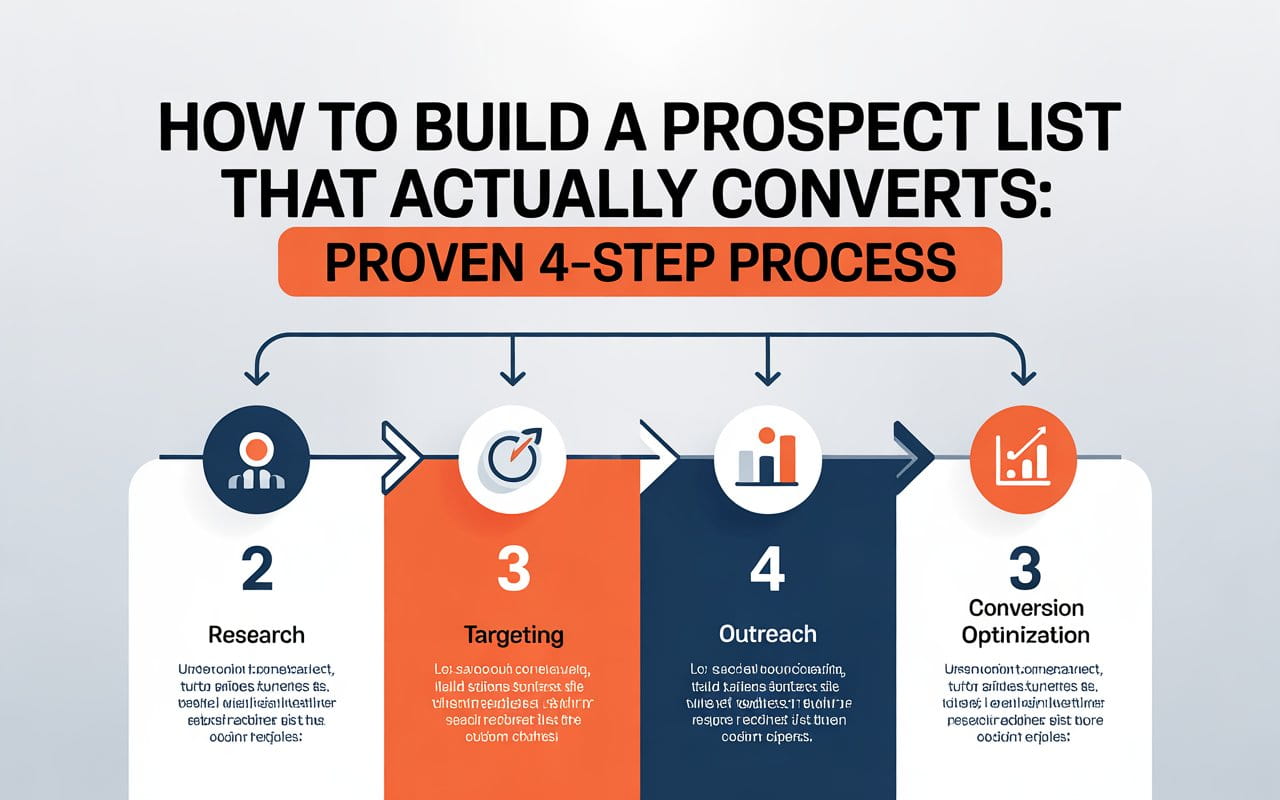
Build a prospect list by defining your ICP, creating buyer personas, sourcing and enriching contacts, verifying data, and prioritizing leads.
10.What are the 4 types of prospects in marketing?
The four types are: Champions (advocates), Decision-Makers, Influencers, and End-Users/Gatekeepers.
11.What are the 5 P’s of prospecting?
The 5 P’s are: Prepare, Plan, Prioritize, Personalize, and Persist for effective lead generation.
12.What is 5 5 5 prospecting?
5 5 5 prospecting means reaching out to 5 new leads, 5 existing leads, and 5 follow-ups daily to maintain consistent outreach.
13.What is the golden rule of prospecting?
The golden rule is to focus on understanding and solving the prospect’s pain points, not just selling your product.