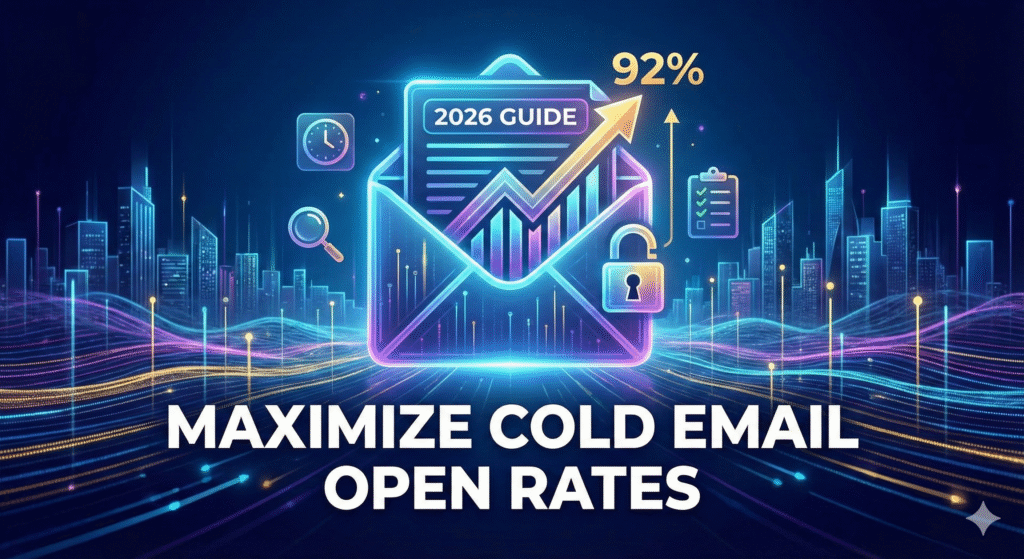
Understanding your Cold Email Open Rate is essential for any marketer or sales professional running a cold email campaign. This metric shows the percentage of recipients who actually open your emails, giving insight into how well your subject lines, email copywriting, and overall targeting perform. High open rates indicate strong engagement, while low rates often signal issues with email deliverability or poor lead list accuracy.
In 2026, mastering this metric is more important than ever, as inboxes become crowded and competition for attention rises. By focusing on effective strategies, including personalization in emails and optimized sending times, you can dramatically improve the chances your emails are read and acted upon.
Email Open Rate Cold Leads Campaign Strategies 2026
Cold leads don’t trust you yet so your email open rate cold leads campaign strategies 2026 need to be different. The winning formula? Personalization + timing + persistence.
Top-performing B2B companies achieve 50-70% open rates (vs. 20-30% industry average) by doing three things right: First, they segment cold leads by industry and personalize subject lines with company-specific hooks. Second, they send 3-5 emails over 2-3 weeks, not desperate one-off blasts. Third, they use plain text emails sent Tuesday-Thursday at 8-10 AM to dodge spam filters.
The secret? Warm up your domain with 50-100 emails before launching. This keeps you out of spam and transforms cold outreach from guesswork into predictable pipeline.

What is a Cold Email Open Rate?
Cold Email Open Rate is the percentage of recipients who open your emails in a campaign. It is calculated by dividing the number of opened emails by the number of emails sent and multiplying by 100. For example, if you send 1,000 emails and 250 are opened, your open rate is 25%. This metric is different from your response rate, which measures clicks or replies. Email tracking software often measures opens, but some tools can misreport if images are blocked or tracking is disabled.
A high open rate signals that your email passes the first test: getting noticed. Many factors influence it, including email domain extension, spam folder avoidance, and email copywriting quality. Brands that ignore these elements often wonder why their emails go unopened. Effective cold email personalization techniques and email first name personalization can turn a mediocre open rate into a strong one by making the recipient feel seen and valued..
How Cold Email Open Rate is Calculated
Calculating your Cold Email Open Rate is straightforward but important. The formula is simple: (Emails Opened ÷ Emails Sent) × 100. However, results can be skewed if recipients block images or if email tracking software is used incorrectly. For accurate measurement, it’s crucial to focus on email deliverability and ensure emails land in the main inbox rather than the spam folder.
Case studies show that B2B companies using LinkedIn Sales Navigator for lead generation see higher open rates because their lists have better lead list accuracy. Accurate targeting ensures emails are relevant, which naturally improves the chances of being opened. Tracking without hurting deliverability is a fine balance that successful marketers master with cold email warm-up strategies.
💡 Struggling with cold email deliverability?
We’ve built cold email infrastructure for 50+ B2B companies—achieving 40-60% open rates and 10-15 consultations monthly.
See how we can help →What is a Good, Average, and Bad Open Rate?
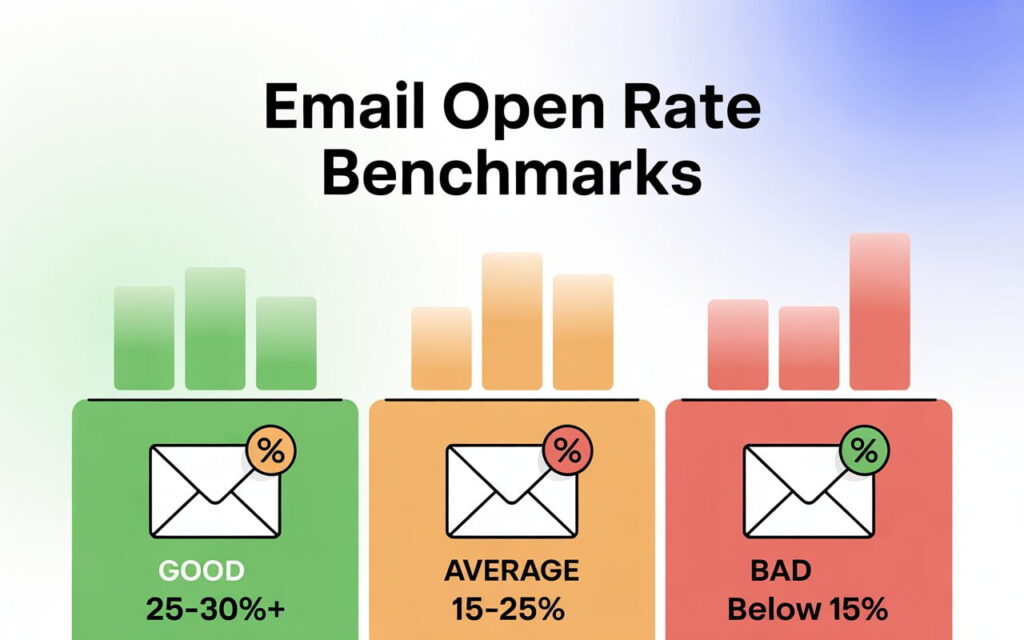
In 2026, a good Cold Email Open Rate for B2B cold emails in the USA is around 50–70%. Anything above 70% is excellent, showing that your emails are engaging and well-targeted. Average rates hover between 30–50%, indicating room for improvement. Rates below 30% are poor and often result from bad targeting, weak subject lines, or deliverability issues.
Open rates vary by industry and email type. For example, SaaS companies might see higher rates than consulting firms. Keeping a benchmark table helps you track performance. A simple comparison: Open rate benchmark for marketing emails is 40–50%, while sales outreach emails often reach 50–65%. Companies that use personalization in emails and strong subject line optimization consistently outperform these averages.
| Industry | Good Open Rate | Average Open Rate | Poor Open Rate |
| SaaS | 55–70% | 35–55% | <35% |
| Consulting | 50–65% | 30–50% | <30% |
| Marketing | 45–60% | 30–45% | <30% |
Key Factors That Affect Open Rates
Many elements influence Cold Email Open Rate. The email sender name is crucial. Emails from recognizable names perform better than generic addresses. The subject line optimization and first few words of the message determine whether someone clicks to open. Emails ending in the spam folder, or sent from suspicious email domain extensions, drastically reduce open rates.
Timing also matters. Knowing the best time to send cold emails in the USA can lift your open rates by 20–30%. Devices and platforms influence behavior too. Emails read on mobile may be opened quicker than those on desktop. Effective avoiding spam filters in cold emailing ensures that your message reaches the inbox, making timing and deliverability a combined art that every marketer must master.
Proven Strategies to Increase Your Cold Email Open Rate
Improving your Cold Email Open Rate begins with crafting irresistible subject lines. Writing effective cold email subject lines that spark curiosity without sounding spammy is key. Next, personalize your messages using cold email personalization techniques. Include the recipient’s name, reference their company, or mention mutual connections to boost engagement.
Other strategies include sending plain text emails instead of HTML, as they are less likely to trigger spam filters. Warming up new email domains using email warm-up tool techniques also helps. Marketers who schedule emails for the best time to send cold emails and combine personalization with clear email copy that gets opened consistently see higher open rates. A/B testing subject lines and experimenting with tips for B2B cold emailing are proven ways to improve performance.
Advanced Techniques
Using AI for hyper-personalization and segmenting leads improves lead list accuracy. Start by building a prospect list designed for high conversions to ensure you’re targeting the right people from the beginning. Platforms like LinkedIn make it easier to target the right audience. Tracking email opens without hurting deliverability allows you to optimize without sacrificing inbox placement. Small tweaks, such as updating the email sender name or refining email copywriting, can yield measurable improvements in open rates.
Common Mistakes That Decrease Open Rates
Many marketers unknowingly reduce their Cold Email Open Rate through small mistakes. Using spammy or misleading subject lines, sending irrelevant messages to poor-quality lists, or relying too heavily on email tracking software all harm performance. Another mistake is failing to use email first name personalization in the greeting.
Even sophisticated B2B campaigns can fail if the email lands in a spam folder or uses a risky email domain extension. Companies also often overuse warm-up tools or neglect Gmail vs Outlook for cold emails, leading to poor email deliverability. Avoiding these common cold email mistakes is as important as crafting the message itself. Understanding why cold email bounces happen and how to prevent them is crucial for maintaining deliverability.
Open Rate vs Other Metrics: What Really Matters
While Cold Email Open Rate is important, it’s not the only metric to track. Reply rate, click-through rate, and conversions are equally crucial. High open rates without engagement may indicate that your emails are noticed but not compelling. Successful campaigns focus on improving response rate from cold emails while monitoring opens.
Tools that track replies and engagement offer deeper insight than just open rates. For example, focusing on email copy that gets opened while tracking click-throughs and conversions can help you optimize campaigns effectively. Ultimately, balancing inbox placement, personalization, and copy ensures both opens and actions are maximized.
Frequently Asked Questions About Cold Email Open Rates
A good open rate for cold emails in 2026 ranges from 50–70%, depending on industry. To increase open rates, focus on personalization in emails, refine your subject line optimization, and improve email deliverability. Avoid relying solely on email tracking software, as it can negatively impact results.
Email domain choice and proper sender setup matter. Displaying the correct email sender name increases trust. Using tools like LinkedIn Sales Navigator for lead targeting and adopting cold email warm-up strategies further boost open rates. Tracking emails smartly while avoiding spam folders ensures your campaigns perform consistently.
Conclusion: Mastering Cold Email Open Rates
Mastering Cold Email Open Rate requires combining personalization, strong subject lines, and technical excellence. Avoid common cold email mistakes, focus on email copywriting, and use plain text emails for better deliverability. Scheduling emails at the best time to send cold emails and optimizing your email sender name ensures your messages reach recipients.
Consistency, testing, and attention to detail make the difference between mediocre and high-performing campaigns. By following these strategies, you can transform your B2B cold emails into a powerful tool for engagement and revenue. High open rates are achievable when every element from email domain extension to email first name personalization is carefully managed.
FAQs
Q: How can I improve cold email open rates in Outlook?
A: Ensure proper email sender name setup and use plain text emails. Optimize subject lines and avoid spam-triggering content to boost open rates.
Q: What are good B2B cold email response rates?
A: Typical B2B response rates range from 5–15%. Personalization, timing, and relevance to the recipient can significantly improve this rate.
Q: What is the average cold email open rate?
A: The average open rate for cold emails is 30–50%, depending on industry and targeting accuracy. High-performing campaigns can reach 50–70%.
Q: What is a good cold email success rate?
A: Success depends on goals—open rates above 50% and response rates above 10% are considered effective for B2B campaigns.
Q: What are typical B2B email open rates?
A: Most B2B campaigns see open rates between 40–60%. Well-segmented lists with cold email personalization techniques perform better.
Q: What do cold email statistics reveal?
A: Statistics show that subject line optimization and email deliverability heavily influence open rates, while personalization increases responses.
Ready to Fix Your Cold Email?
🛡️ We guarantee 10 consultations in 60 days or work free.
⭐⭐⭐⭐⭐ 50+ clients | 2.4M emails sent | 3.2% reply rate
What you get:
✅ Complete infrastructure (30 emails, 10 domains)
✅ 10,000 personalized emails monthly
✅ First consultations in 5-6 weeks
2 spots left for February 2026