
You spent an hour writing a cold email.
The subject line is sharp. The offer is strong. You personalized it properly. Then you hit send at 2 PM on a Friday — and nothing happens.
No opens. No replies. Just silence.
Here’s the hard truth: timing can swing your open rate from 5% to 44%. A perfect email sent at the wrong moment vanishes into an inbox no one’s checking.
This guide gives you the exact best times to send cold emails — backed by data from over 10 billion emails — so your outreach gets opened, read, and replied to. We’ll cover the best hours, the best days, industry-specific timing, and the follow-up sequence most people completely ignore.

Let’s get into it.
Quick Answer: What Is the Best Time to Send Cold Emails?
The best time to send cold emails is between 8 AM and 10 AM, Tuesday through Thursday, in your recipient’s local time zone.
Thursday morning at 9–11 AM consistently produces the highest cold email open rates — reaching up to 44% in 2025 B2B benchmarks.
Avoid weekends entirely. And never send on Friday afternoons.
When Is the Best Time to Send Cold Emails? (Hour by Hour Breakdown)
Most people send emails when they’re at their desk.
That’s the wrong approach. You should send when your prospect is at theirs — alert, focused, and open to reading something new.
Here’s what 10 billion emails tell us about the best time of day to send cold emails:
| Time Window | Performance | Why It Works |
| 6–8 AM | Very High (42.7% open rate) | Early risers — your email sits at the top of a clean inbox |
| 8–10 AM | Highest | Professionals triage email as they start their workday |
| 10 AM–12 PM | High | Mid-morning break; alert but not yet drowning in meetings |
| 12–2 PM | Moderate | Lunch scroll — variable and unpredictable |
| 2–5 PM | Declining | Decision fatigue kills reply rates in this window |
| 8–11 PM | Surprisingly High | Executives review their inboxes after hours — more on this below |
The 8 to 10 AM window wins for most audiences. Your email sits at the top before the chaos of the day takes over.
But here’s what most guides won’t tell you. For C-suite executives and senior decision-makers, 8–11 PM evening sends consistently outperform morning sends on reply rate. CEOs manage their own inboxes outside business hours — away from meetings and gatekeepers. That’s your opening.
What Is the Best Day to Send Cold Emails?
The hour matters. But the day you choose matters just as much.
Moosend analyzed over 100k+ emails and found that Thursday delivers the highest cold email open rates of any weekday. Tuesday comes in a close second.
Here’s the full ranking:
| Rank | Day | Why |
| 🥇 Thursday | Best day overall | Highest open rates (up to 44%); people are engaged before the weekend |
| 🥈 Tuesday | Second best | Monday backlog is cleared; prospects are focused and responsive |
| 🥉 Wednesday | Solid | Consistent mid-week performance across industries |
| 4th | Monday | Fierce inbox competition from weekend backlog |
| 5th | Friday | Mentally checked out; emails get forgotten |
| 6th | Sunday | Poor — but slightly better than Saturday for some niches |
| 7th | Saturday | Worst day. Full stop. |
Stick to Tuesday, Wednesday, and Thursday. That’s your power window every single week.
When Is the Best Time to Send Cold Emails? (By Industry)
Here’s where most guides completely fail you.
There is no single universal “best time” across every industry. A healthcare administrator and a SaaS founder operate on completely different schedules — and check their email differently too.
Here’s the industry-specific timing data:
SaaS and Tech Companies
Send on Tuesday or Wednesday, 9–11 AM. Tech professionals are in deep-focus mode early. Catch them as they surface mid-morning. Avoid Monday mornings and Friday afternoons entirely.
Financial Services
Finance professionals arrive early and check email before markets open. Target 7–9 AM on Tuesday or Wednesday. This audience has some of the highest B2B cold email open rates of any sector.
Manufacturing and Industrial
These managers follow rigid shift-based routines. Send on Monday or Tuesday, 7–9 AM — right before their day locks into production meetings and floor operations.
Healthcare and Medical
Doctors and medical administrators have brief windows between patient appointments. Target 7–8:30 AM on Tuesday or Thursday. Mondays are brutal — clinical schedules are packed from the start.
Recruiting and HR
HR professionals triage applicant emails first thing each morning. Target Tuesday or Wednesday at 8 AM. For candidate outreach specifically, Sunday evening performs surprisingly well — job seekers prepare mentally for the week ahead.
E-Commerce and Retail
This audience operates outside standard corporate hours. Target 10 AM–2 PM on weekdays, or 4 PM on Tuesdays. MailerLite’s 2025 data shows Tuesday at 4 PM maximizes conversion for e-commerce cold outreach.
💡 Need help setting up Google Workspace?
We’re certified Google partners offering 64% off + free professional setup ($2,000 value). Used by 151+ companies.
Get your quote →Best Time to Send Cold Emails by Persona
Your prospect’s job title shapes their email habits just as much as their industry does.
CEOs and Founders: Before 8 AM or after 8 PM. Executives manage their own inboxes outside business hours. Tuesday and Thursday are your safest bets for landing in front of them.
VP of Sales and Sales Managers: These people live in their inbox. Target 9–11 AM on Tuesday through Thursday before their pipeline calls and team standups consume the rest of the day.
IT Managers and CTOs: Deep-work mode rules their mornings. Try 10 AM–1 PM on Wednesday or Thursday — later than most people assume works.
Small Business Owners: They don’t follow corporate schedules. Friday mornings and Sunday evenings actually work well for this group — a genuine exception to the avoid-the-weekend rule.
Follow-Up Email Timing — The Section Nobody Talks About
Here’s a stat that changes everything:
60–80% of cold email replies come from follow-up emails — not the first one.
Most people obsess over when to send the initial email and completely ignore follow-up timing. That’s leaving most of their replies on the table.
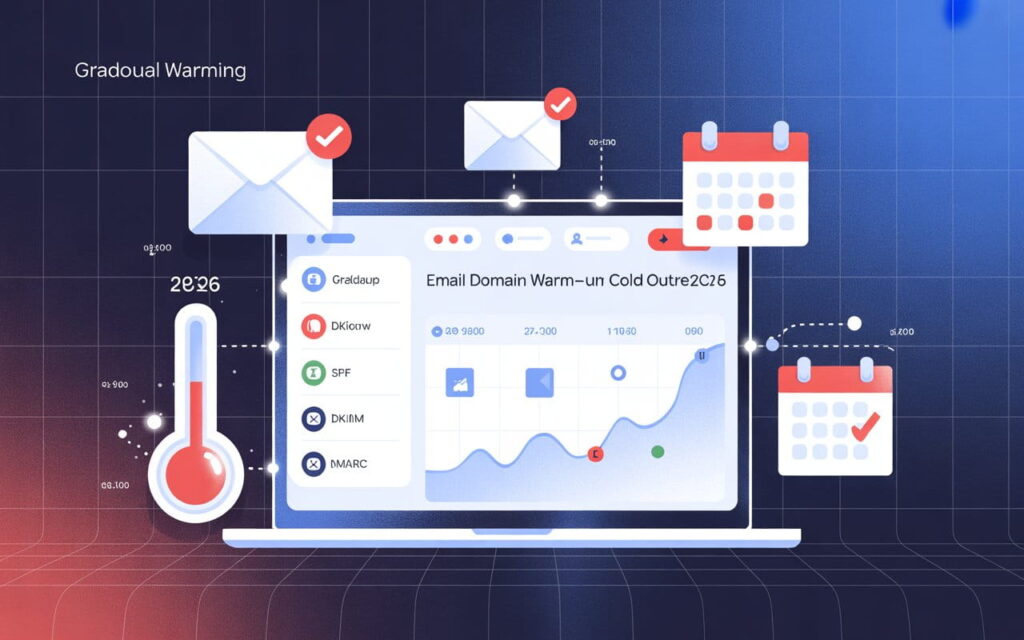
Before we get into the timing, though — your follow-up sequence is only as good as the email infrastructure powering it. If your email deliverability isn’t solid, your follow-ups land in spam before anyone reads them.
Services like Leads Monky’s cold email infrastructure include proper DKIM, DMARC, and SPF setup alongside a 14-day warmup period — so every email in your sequence actually reaches the inbox. It’s the foundation that makes timing work in the first place.
Now, here’s the follow-up sequence timing that gets results:
Follow-Up #1 — 2 to 3 business days later Sent your first email on Tuesday morning? Follow up Thursday morning. Keep it to two lines. Reference the original and move on.
Follow-Up #2 — 5 to 7 days after Follow-Up #1 Switch the day and adjust the time. If your first two emails went out on Thursday, try Tuesday for this one. New timing equals a new chance.
Follow-Up #3 — The Breakup Email (7–10 days later) Short. Direct. Signals this is your final outreach. These “breakup emails” consistently generate the highest reply rates of any message in the sequence. They create urgency without pressure.
One hard rule: Never send more than one cold email per day to the same prospect. Spacing protects your email deliverability and keeps you out of spam folders.
The Timezone Problem That’s Quietly Killing Your Results
This mistake is more common than you’d think.
If you’re sending to prospects across multiple regions, sending at “9 AM” based on your timezone is not a strategy. It’s random.
Your 9 AM EST email lands at 6 AM for someone in California. Way too early. The same email hits midnight in London. Completely irrelevant.
The fix: timezone-based scheduling.
Tools like Smartlead, Lemlist, and Instantly let you segment your list by geography and deliver at the optimal local time for each recipient. Teams using this approach have reported up to a 20% improvement in email engagement rates after switching to timezone-aware sending.
This is also where having the right email infrastructure matters. Google Workspace accounts with dedicated sending domains — like what Leads Monky provides starting at $2.50 per mailbox — give you the multi-domain setup needed to run timezone-segmented campaigns cleanly, without mixing your business email with your outreach domains.
If you’re managing timezone targeting manually, create separate send queues for EST, PST, GMT, and other major zones. It takes an extra hour to set up and saves your campaign every single time.
5 Cold Email Timing Mistakes You Need to Stop Making
Mistake #1: Sending on Monday mornings. Your email competes with a weekend’s worth of inbox buildup. Tuesday is almost always the smarter choice.
Mistake #2: Assuming morning is always best. For senior executives and C-suite contacts, evening sends between 8–11 PM consistently outperform morning sends on reply rate. Know your persona before you schedule.
Mistake #3: Ignoring time zones. One send time does not fit all geographies. If you’re running campaigns across regions without timezone segmentation, you’re making this mistake right now.
Mistake #4: Sending every follow-up at the same time as the original. If your 8 AM Tuesday email got ignored, another 8 AM Tuesday email faces the exact same conditions. Vary the day and time across your cold email sequence.
Mistake #5: Obsessing over timing when bigger issues exist. Timing matters — but your cold email subject line, your offer, your personalization, and your email deliverability matter more. A great email at 10 AM beats a weak one at the “perfect” 8 AM every single time.
Frequently Asked Questions
When is the best time to send cold emails?
When is the best time to send cold emails?
Between 8 AM and 10 AM on Tuesday or Thursday, in your recipient’s local time zone. Thursday morning at 9–11 AM produces the highest cold email open rates in B2B data.
When is the best time to send a cold email to a CEO?
When is the best time to send a cold email to a founder or C-suite executive? Before 8 AM or after 8 PM on a Tuesday or Thursday. Senior executives manage their own inboxes outside of business hours — that’s your real window.
What is the best time to send a cold email for maximum replies?
What is the best time to send a cold email if replies are the goal? Thursday 9–11 AM wins for most B2B audiences. For enterprise decision-makers, 8–11 PM evening sends outperform morning sends on reply rate specifically.
What is the best time to send cold emails on weekends?
What is the best time to send cold emails if you absolutely must send on a weekend? Sunday evening is your best option. Saturday is the single worst day of the week for cold email open rates — avoid it completely.
Should you send cold emails on Friday?
Avoid it. Prospects are mentally checked out before the weekend. Your cold outreach deserves a better shot than a distracted Friday afternoon inbox.
The Real Reason Timing Fails Most Cold Emailers
Here’s the part nobody talks about.
You can nail the timing perfectly — Thursday, 9 AM, right time zone, right persona — and still get zero replies.
Why? Because timing is the last thing that matters, not the first.
If your email deliverability is broken, your perfectly-timed email lands in spam. If you’re sending from your main business domain, one bad campaign can destroy your entire company’s email reputation. If your cold email infrastructure isn’t set up properly — no SPF, no DKIM, no DMARC — none of the timing advice in this guide will save you.
This is exactly why teams that get consistent results start with infrastructure first. Leads Monky’s done-for-you cold email service builds the complete system before sending a single message — dedicated domains, 30 email accounts, full DNS authentication, and a 14-day warmup — so when timing is optimized, every email actually lands where it’s supposed to.
Timing is the multiplier. Infrastructure is the foundation. You need both.
Final Takeaway
The best time to send cold emails is Thursday morning, 9–11 AM, in your prospect’s local time zone.
But great cold email timing is about more than one slot on one day. It means understanding your prospect’s role, their industry, their schedule — and building a follow-up sequence timed to catch them when they’re actually ready to reply.
Get the timing right. Build the infrastructure to support it. Personalize for the person receiving it.
That’s when cold email campaigns stop feeling like a lottery and start feeling like a real, predictable system.
Now go hit send — at the right time.
Get Google Workspace at 64% Off
Same service. Better price. Professional setup included.
⭐⭐⭐⭐⭐ 151+ companies trust us
Partner Pricing:
• Business Starter: $3/month (Google: $8)
• Business Standard: $13/month (Google: $17)
• Business Plus: $20/month (Google: $26)
FREE:
Complete DNS setup + 24/7 support + USA IPs
15-user minimum | Setup in 24 hours