Your cold email has three seconds to survive the inbox.
Three seconds. That’s it.
Founders, investors, journalists, and published authors get flooded with cold emails every single day. Most get deleted without a second thought. The ones that survive share one thing in common — they make the reader feel like the email was written just for them.
This guide gives you 7 battle-tested cold email templates for founders & authors — plus subject lines, a follow-up sequence, and the infrastructure secrets most people completely ignore.
Before we get into templates, though, let’s talk about something nobody else in this space is covering.

The Hidden Reason Your Cold Emails Go to Spam (It’s Not Your Copy)
Most cold email guides jump straight to templates.
That’s a mistake.
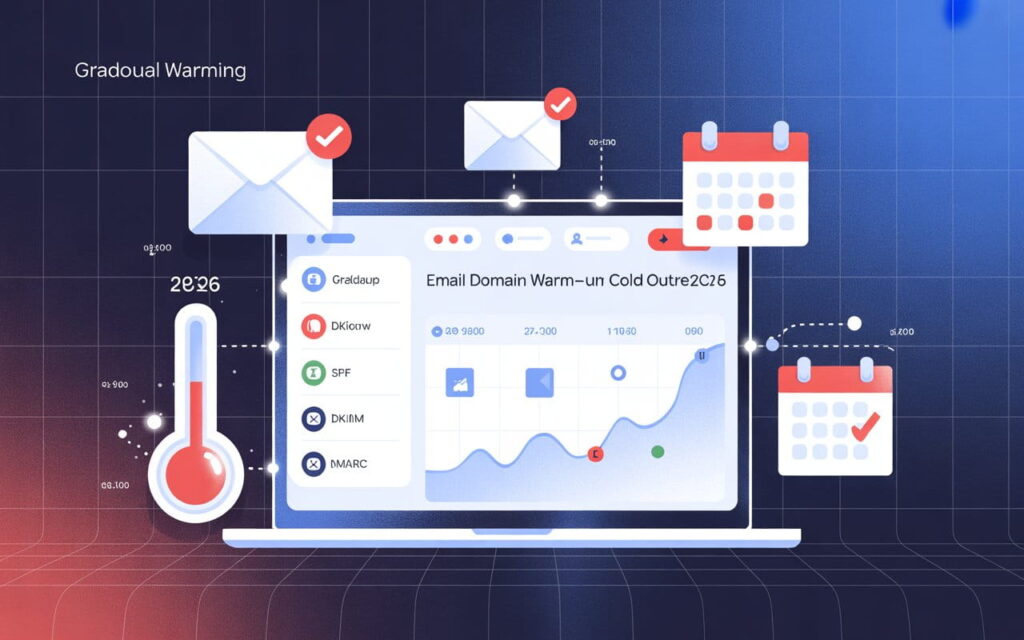
Here’s what they don’t tell you: even a perfectly written cold email template goes straight to spam if your technical setup is broken. We’re talking SPF, DKIM, and DMARC records — the three authentication shields that tell email providers “yes, this sender is legitimate.”
Skip them and Gmail marks you as suspicious. Your open rate tanks. Your domain reputation gets burned.
If you’re setting up cold email infrastructure for the first time, services like Leads Monky handle the full Google Workspace setup — including DKIM, DMARC, SPF configuration, spam protection, and email warmup starting at just $2.50 per mailbox. That’s the foundation everything else is built on.
Now let’s talk about what goes in the emails.
What Makes a Cold Email Work in 2026?
Research from Backlinko shows personalized cold emails get 32.7% more replies than generic templates. Emails between 75–125 words perform best. And 47% of recipients decide whether to open based purely on the subject line.
The emails that consistently win share four traits:
- They open with one specific, genuine observation
- They explain who you are in one sentence
- They make one clear, time-boxed ask
- They give the reader an easy way to say no
That’s the entire framework. Simple. But almost nobody executes all four consistently.
Cold Email Templates for Founders (4 Proven Formulas)
Template 1: Customer Discovery Interview
Best for: Early-stage founders doing customer research
Subject: Quick question about how you handle [pain point] — [Your Name]
Hi [First Name],
I came across your post about [specific topic] — the point you made about [specific detail] is something my team debates constantly.
I’m [Your Name], founder of [Startup]. We’re building [one-line description] for [target audience].
I’m running 15-minute research calls this week. No pitch — just learning. Would Thursday or Friday work?
Totally fine if not. Even a pointer to someone else in this space helps.
Thanks, [Your Name]
Why it works: You prove you did research in sentence one. You state the purpose upfront — research, not sales. The ask is tiny. And the exit ramp (“totally fine if not”) paradoxically increases replies by removing social pressure.
Template 2: Investor Cold Outreach
Best for: Pre-seed founders without a warm intro
Subject: $[X]K MRR | [Industry] | Quick intro — [Your Name]
Hi [First Name],
Your bet on [specific portfolio company or thesis] is one I keep coming back to — it shaped how I think about [relevant topic].
I’m [Your Name], co-founder of [Startup Name]. We’ve hit $[X]K MRR in [Y] months solving [problem] for [audience].
Would a 20-minute intro call make sense? Not looking for a check today — just want your perspective from someone who’s seen this space up close.
Happy to send the deck first if that’s easier.
[Your Name]
Why it works: The subject line leads with traction. Investors open traction emails — full stop. “Not looking for a check today” lowers the stakes and dramatically increases meeting rates. It sounds counterintuitive. It absolutely works.
Template 3: Partnership & Co-Marketing Outreach
Best for: Founders targeting adjacent brands or communities
Subject: Quick idea for [Their Company] x [Your Company]
Hi [First Name],
I’ve been a [Their Product] user for [time period]. The way you handle [specific feature] is genuinely impressive — your audience overlaps almost perfectly with ours.
I’m [Your Name] from [Your Company]. We’re at [X] users / $[X]K MRR helping [audience] achieve [outcome].
I have a specific co-marketing idea that could drive meaningful signups for both sides in 30 days. 20-minute call this week? I’ll bring a one-pager.
[Your Name]
Why it works: Being a real user earns instant credibility. Promising a one-pager signals preparation and reduces their mental effort to say yes.
Template 4: Press & Journalist Outreach
Best for: Founders pitching data, expert commentary, or a company story
Subject: Data point for your story on [Topic] — [Your Name]
Hi [First Name],
Your piece on [specific article] last month was one of the most accurate takes on [topic] I’ve read this year. The section about [specific point] maps directly to what we’re seeing in our data.
I’m [Your Name], founder of [Startup]. We’ve tracked [metric] across [sample size] companies and found [surprising insight] — might be useful context for a follow-up.
Happy to share raw data or hop on a 10-minute call. No pressure either way.
[Your Name]
Why it works: Journalists get hundreds of pitches. Offering a data point positions you as a source, not a promoter. That’s a fundamentally different — and far more welcome — relationship.
Cold Email Templates for Authors (3 Proven Formulas)
Template 5: Podcast Guest Pitch
Best for: Authors promoting a book or building a platform
Subject: Guest pitch: [Specific Episode Title] — [Your Name], author of [Book Title]
Hi [First Name],
I’ve been listening to [Podcast Name] since your episode with [specific past guest]. The conversation about [topic] is one I still think about.
I’m [Your Name], author of [Book Title], published by [Publisher]. Based on your audience’s interest in [theme], I think we could explore: “[Specific Episode Title Idea].”
Happy to send a copy of the book and a full guest brief if you’d like to dig in. No hard sell — just planting the seed.
[Your Name]
Why it works: Pitching a specific episode title does the creative work for the host. That alone puts you ahead of 90% of author outreach emails landing in their inbox that just say “I’d love to be a guest.”
Template 6: Book Review & Media Outreach
Best for: Authors reaching bloggers, newsletter writers, and journalists
Subject: Book for [Publication Name] — [Author Name]
Hi [First Name],
I’ve been reading [Publication] for a while — your review of [specific past book] is what made me realize our audiences connect.
I recently published [Book Title] — a [genre] book about [topic in one sentence]. It’s been covered by [credible outlet if available].
I’d love to send you a copy — physical or digital, your call — with zero expectation. If it resonates, a mention would mean a lot. If not, I hope it’s still a good read.
Thank you for the work you do.
[Author Name]
Why it works: “With zero expectation” removes social obligation. And ironically, that makes people want to help you. Pressure repels. Generosity attracts.
Template 7: Speaking & Keynote Opportunity
Best for: Authors pitching conferences and live events
Subject: Speaker idea for [Event Name] — [Your Name]
Hi [First Name],
I attended [Event Name] last year and loved the programming direction — especially the focus on [specific theme].
I’m [Your Name], author of [Book Title] and [brief credibility line]. I’ve been developing a talk called “[Talk Title]” that covers [specific angle aligned with their theme].
Would a 15-minute conversation make sense to explore a fit for this year?
[Your Name] | [Website]
Why it works: A pre-built talk title with a specific angle signals you’re not blasting this to 200 events. Event organizers can feel the difference immediately.
The Infrastructure Nobody Talks About
Here’s something most cold email guides completely skip.
Your templates can be perfect. Your subject lines can be brilliant. But if your email deliverability is broken, none of it matters.
This is especially true when you’re scaling — sending across multiple domains, running simultaneous cold email campaigns for different audiences, or managing warmup sequences for new inboxes.
The setup that actually works looks like this: dedicated sending domains (never your primary business domain), 30+ email accounts distributed across those domains, clean USA-based IPs, and proper SPF/DKIM/DMARC authentication configured from day one.
Agencies like Leads Monky build exactly this kind of done-for-you cold email infrastructure — handling everything from domain setup and warmup to personalized 5-step sequences and daily campaign optimization. Their clients average a 45% open rate and 3.2% reply rate, versus the industry average of 0.5%.
That gap isn’t talent. It’s infrastructure.
💡 Need help setting up Google Workspace?
We’re certified Google partners offering 64% off + free professional setup ($2,000 value). Used by 151+ companies.
Get your quote →15 Subject Lines That Get Opened (Steal These)
Your email doesn’t matter if it never gets opened. Here are proven subject line formulas for both founder email outreach and author cold email campaigns:
For Founders:
- $[X]K MRR | [Industry] | Quick intro
- [Their Company] x [Your Company] — partnership idea
- Quick question about how your team handles [pain point]
- Data you might find useful on [topic]
- Saw your [funding round] — congrats + quick idea
- Your [tweet/post] about [topic] — follow-up thought
- Intro: [Mutual Connection] suggested I reach out
For Authors:
- Guest pitch: [Episode Title Idea] — [Your Name]
- New book on [topic] — thought your readers might connect
- Sending you [Book Title] — no strings attached
- Speaker idea for [Event] — [Author Name]
- [Book Title] — copy for [Publication] if interested
Universal rules: Keep it under 50 characters. Be specific. Never use “Following up” as a subject line — it’s the fastest way to get deleted without being opened.
The 3-Email Follow-Up Sequence That Doubles Your Replies
Here’s what your competitors won’t tell you.
60% of all replies come after the second or third follow-up. Sending one email and waiting is leaving the majority of your results on the table.
Here’s the exact sequence:
Day 4 — Soft bump:
“Just bumping this to the top of your inbox in case it got buried. Happy to adjust the ask if the timing isn’t right.”
Day 10 — Value add:
“Thought of you when I saw [relevant article/stat/development]. Sharing in case it’s useful: [link]. Still happy to connect — no rush.”
Day 18 — Graceful close:
“I’ll stop following up after this — I know inboxes get overwhelming. If timing ever works, my door’s always open. Wishing you the best with [their product/book/event].”
That third email works because of what behavioral researchers call the “closing the loop” effect. When people sense a relationship ending, many respond. It also preserves goodwill — which matters more than any single reply.
5 Mistakes Killing Your Cold Email Reply Rate Right Now
Mistake 1: Opening with “I hope you’re doing well” It signals template instantly. Replace it with one specific observation about their recent work. Every single time.
Mistake 2: Talking about yourself for three paragraphs They don’t care yet. You haven’t earned that attention. Make your first sentence about them, not you.
Mistake 3: Attaching a pitch deck in the first email Attachments trigger spam filters and feel presumptuous. Offer to send assets only after they show interest.
Mistake 4: Making a vague or multiple ask “I’d love to connect, get feedback, and maybe explore a partnership” is three asks disguised as one sentence. Pick one. Make it small. Give it a time estimate.
Mistake 5: Sending from your primary business domain This is a big one. Every spam complaint, every bounce, every deliverability issue damages the domain you use for all your business email. Use dedicated sending domains for cold outreach — your main domain stays clean.
Quick FAQ: Cold Email Templates for Founders and Authors
What is the best cold email template for founders?
The best founder cold email template opens with a specific observation about the recipient, states who you are in one sentence, makes one time-boxed ask (15–20 minutes), and includes a graceful exit ramp. Emails under 120 words with these four elements consistently outperform longer, sales-heavy approaches.
How do authors write cold emails to get on podcasts?
Authors should pitch a specific episode title — not just “I’d love to be a guest.” Reference a past episode you genuinely listened to. Offer to send the book with no expectation. One specific, aligned angle beats ten generic pitches every time.
How long should a cold email be?
75 to 125 words is the sweet spot. Anything over 200 words signals low respect for the reader’s time. Write it, then cut 30%. If you can’t explain your ask in three short paragraphs, you haven’t thought it through yet.
Do cold emails still work in 2026?
Yes — but the bar for personalization is higher. Cold email outreach remains one of the highest-ROI channels for early-stage founders and authors. The difference between 1% and 30% reply rates comes down to specificity, a tight structure, and clean email deliverability infrastructure.
How many follow-ups should you send?
Three. Day 4, day 10, and day 18. After that, let go gracefully. Most of your replies will come from that second or third touchpoint — not the first email.
The Bottom Line
The cold emails that get replies in 2026 all share one trait: they make the recipient feel like the message was written specifically for them.
That’s not about spending an hour per email. It’s about spending 10 minutes on the first sentence the personalized hook that signals you did your research and respect their time.
Use the seven templates above as your scaffold. Edit the first line every single time. Keep your total word count under 120. Make one ask. Give them an exit ramp. Follow up three times, then let go.
And get your technical infrastructure right from the start — authentication records, dedicated sending domains, clean IPs, and a proper warmup sequence. Without that foundation, even the best-written email never reaches the inbox.
Do all of it consistently, and your reply rate won’t look like the industry average. It’ll look like the top 3%.
Get Google Workspace at 64% Off
Same service. Better price. Professional setup included.
⭐⭐⭐⭐⭐ 151+ companies trust us
Partner Pricing:
• Business Starter: $3/month (Google: $8)
• Business Standard: $13/month (Google: $17)
• Business Plus: $20/month (Google: $26)
FREE:
Complete DNS setup + 24/7 support + USA IPs
15-user minimum | Setup in 24 hours