Launching a successful email outreach campaign starts long before you hit send. Many marketers overlook the critical step of Warm Up Your Email Domain, and that mistake can land your messages straight in the spam folder, damaging your sender reputation permanently.However, it’s important to understand that warm-up alone won’t solve deeper issues read our guide on why email warm-up doesn’t fix deliverability problems to avoid common mistakes
Warming up your email domain ensures proper inbox placement, builds trust with email service providers, and establishes strong positive engagement signals that keep your campaigns effective. By gradually increasing email volume, monitoring email deliverability metrics, and following a structured warm-up schedule, you can protect your domain, avoid spam complaints, and set your outreach up for long-term success in a competitive inbox environment.
What Is Domain Warm-Up and Why It Matters
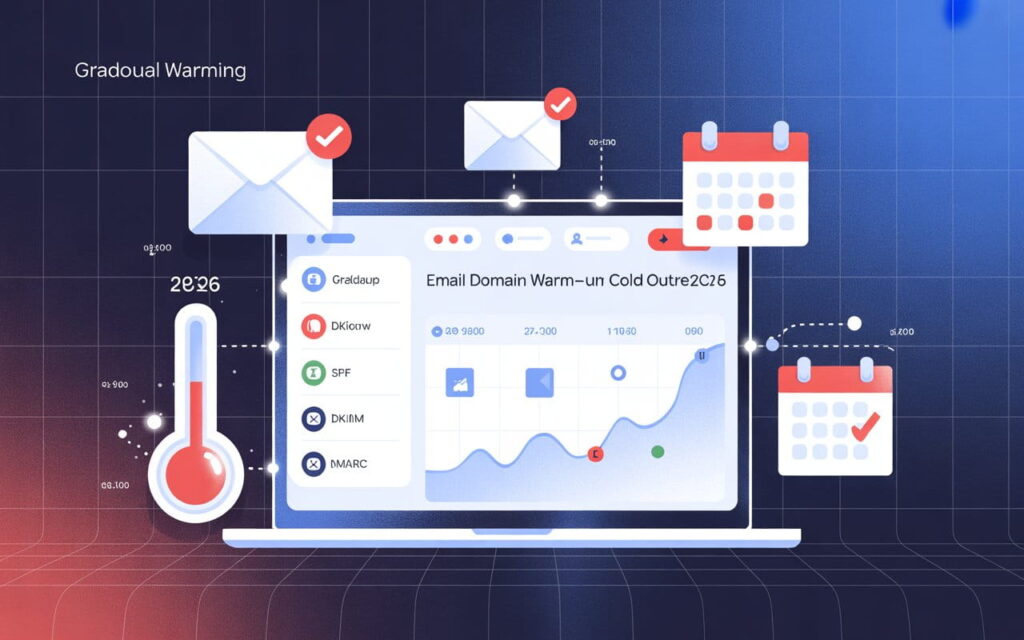
Domain warm-up is the process of gradually building your new domain reputation with email service providers like Gmail, Outlook, or Yahoo. Think of it as proving your domain is trustworthy before sending bulk emails. Without it, even a perfectly crafted email outreach campaign risks landing in spam folders. Proper email authentication using SPF, DKIM, DMARC is critical during this phase.
A proper domain warm-up process starts with manual sending (Day 1–14), low email volume, and slowly increasing engagement. Engagement metrics like reply rate and open rates serve as domain trust signals, letting inbox providers know your emails are wanted. Skipping this step leads to blacklisting, poor inbox placement, and wasted marketing efforts.
💡 Struggling with cold email deliverability?
We’ve built cold email infrastructure for 50+ B2B companies—achieving 40-60% open rates and 10-15 consultations monthly.
See how we can help →Why You Shouldn’t Use Your Main Domain
Your primary vs secondary domain matters. Sending cold outreach from your main domain risks your entire brand reputation. A single campaign could trigger spam triggers, reduce email deliverability metrics, and affect all business communications.

Instead, use a secondary domain for outreach. Here’s a step-by-step guide to setting up a scalable cold email system for outreach.
This allows experimentation, scaling, and testing without harming your main domain. Setting up cold email infrastructure for the secondary domain ensures better human-like sending behavior and improved inbox placement for future campaigns.
Steps to Warm Up a New Domain Properly
The first step in the domain warm-up process is configuring email authentication. Set up SPF, DKIM, DMARC correctly to prove legitimacy. Incorrect authentication sends emails straight to spam folders regardless of your email content best practices.
Next is manual email warm-up, starting with just a few emails per day and gradually increasing the volume. Over Day 1–14, monitor engagement tracking carefully. Use automated email warm-up tools to complement manual sending, but avoid fully relying on them. A mix ensures authentic engagement and strong domain trust signals.
Best Practices for Email Sending During Warm-Up
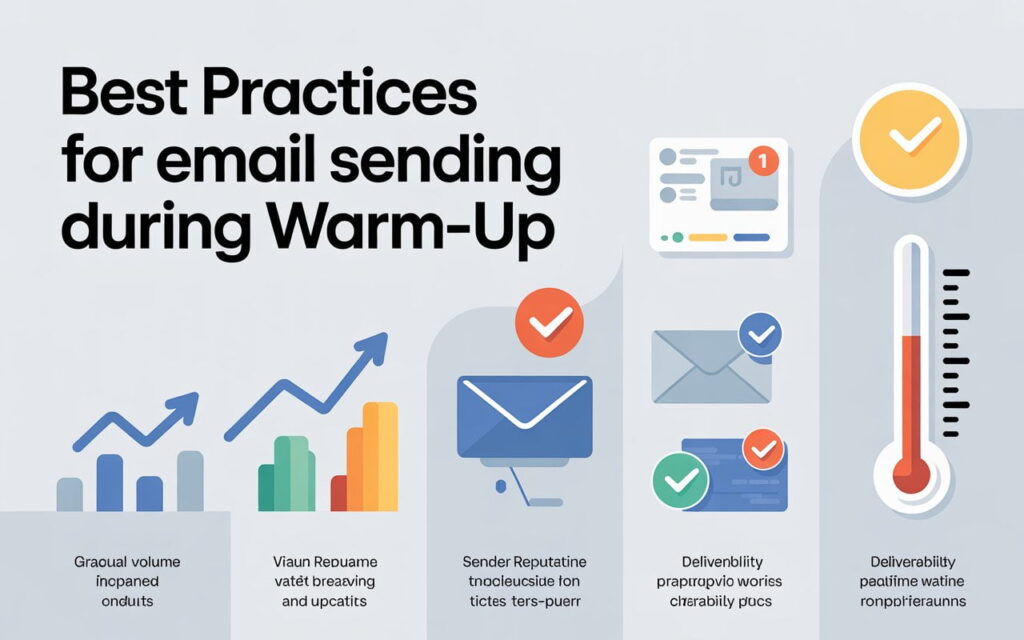
Target your most engaged contacts first. Open and reply rates provide positive engagement signals. Sending to inactive or role-based emails or catch-all domains can harm your domain reputation management quickly.
Maintain consistent email volume and avoid sudden spikes. Gradual growth shows inbox provider filters that you are a legitimate sender. Also, ensure subject line optimization and follow email content best practices to prevent spam triggers. This combination improves email deliverability metrics significantly.
Tools and Automation for Efficient Domain Warm-Up
Automated warm-up networks are helpful to increase email volume safely. These tools mimic human-like sending behavior, reply to emails, and generate positive engagement signals.
However, tools should supplement, not replace manual efforts. Monitor email campaign monitoring metrics such as bounce rate, spam complaints, and inbox placement. Using both manual and automated approaches ensures strong new domain reputation over time.
Monitoring and Maintaining Your Domain Reputation
Track email deliverability metrics closely. Bounce rates over 2–3% or rising spam complaints indicate issues that must be resolved immediately. Use email list verification to maintain mailing list quality.
Check domain reputation management tools to monitor mailbox provider signals. Even after warm-up, continuous engagement tracking ensures your cold email infrastructure stays healthy. Regular audits prevent blacklist removal challenges and preserve long-term sender reputation.
Common Issues and Troubleshooting
Emails landing in spam folders often result from poor email authentication, high email rate-limits, or purchased email lists. Correct role-based emails and remove invalid addresses.
Frequent issues include sudden bounce rate spikes and unexpected engagement metric drops. Regular email campaign monitoring and list cleaning prevent long-term damage. Maintaining consistent human-like sending behavior is essential.
How Long Does Domain Warm-Up Take?
Warm-up duration depends on email volume, mailing list quality, and new domain reputation. Typically, small domains need 2–4 weeks to gain trust with inbox providers.
Gradual volume increase is key. Rushing the process triggers spam complaints and alerts inbox provider filters. For detailed scheduling, check out our B2B domain warm-up guide.
. Patience during manual sending (Day 1–14) ensures sustainable email deliverability metrics and successful outreach campaigns.
Advanced Tips to Maximize Inbox Placement
Maintain a clean email infrastructure with regular audits of SPF, DKIM, DMARC. Personalize emails and optimize subject line optimization to increase positive engagement signals.
Use engagement analytics to adjust campaigns. Combine manual and automated approaches for best results. Monitoring domain trust signals and inbox provider filters ensures your emails continue landing in primary inboxes instead of spam.
Conclusion and Key Takeaways
Warming up a domain is critical for cold email deliverability and professional cold email success. Start with a secondary domain, follow a structured warm-up schedule, and track engagement metrics closely.
Ready to Fix Your Cold Email?
🛡️ We guarantee 10 consultations in 60 days or work free.
⭐⭐⭐⭐⭐ 50+ clients | 2.4M emails sent | 3.2% reply rate
What you get:
✅ Complete infrastructure (30 emails, 10 domains)
✅ 10,000 personalized emails monthly
✅ First consultations in 5-6 weeks
2 spots left for February 2026
FAQs
How to warm up a new domain?
Start by sending a small number of emails daily from your new domain, gradually increasing volume over several weeks. Ensure proper email authentication and target highly engaged contacts first.
What is the 60/40 rule in email?
The 60/40 rule suggests 60% of your emails should provide value and engage recipients, while 40% can promote products or services. It helps maintain positive engagement signals and sender reputation.
How to warm up email for cold outreach?
Begin with low email volume, send to engaged contacts, and gradually increase over time. Use a mix of manual sending and automated warm-up tools to improve deliverability.
What is the 30/30/50 rule for cold emails?
This rule recommends 30% personalization, 30% educational content, and 50% actionable call-to-action in cold emails. It maximizes opens, replies, and overall inbox placement.
What are the 3 C’s of cold calling?
The 3 C’s stand for Connect, Communicate, and Convert—building rapport, delivering your message clearly, and encouraging action. They guide structured and professional outreach.
What is the 80/20 rule in email marketing?
Also called the Pareto principle, it states 80% of your results come from 20% of your audience or campaigns. Focus on high-performing segments to improve email campaign monitoring and ROI.
Q: How to warm up your email domain for cold outreach in Outlook?
A: Start sending a few emails daily to engaged contacts from Outlook, gradually increasing volume while ensuring SPF, DKIM, and DMARC are configured correctly.
Q: How to warm up your email domain for cold outreach according to Reddit tips?
A: Begin with low daily sending, target active contacts first, and increase gradually while tracking engagement metrics, following best practices shared by email marketing communities.
Q: How to warm up your email domain for cold outreach in Gmail?
A: Send low volumes initially, gradually increase over weeks, authenticate emails with SPF, DKIM, DMARC, and monitor inbox placement in Gmail.
Q: How to warm up your email domain for cold outreach for free?
A: Use free tools and manual sending to gradually increase email volume, monitor engagement, and ensure proper authentication without paid automation.