You store contracts in Google Drive. Your team sends hundreds of emails daily through Gmail. Someone shares a file accidentally with the wrong person.
That one mistake can cost you everything.
Data loss prevention in Google Workspace isn’t just a fancy IT term. It’s the difference between a minor incident and a full-blown data breach. And in 2026, with Gmail DLP now fully live, there’s never been a better time to understand exactly how it works and where it falls short.
Let’s break it all down.
What Is Google Workspace DLP?
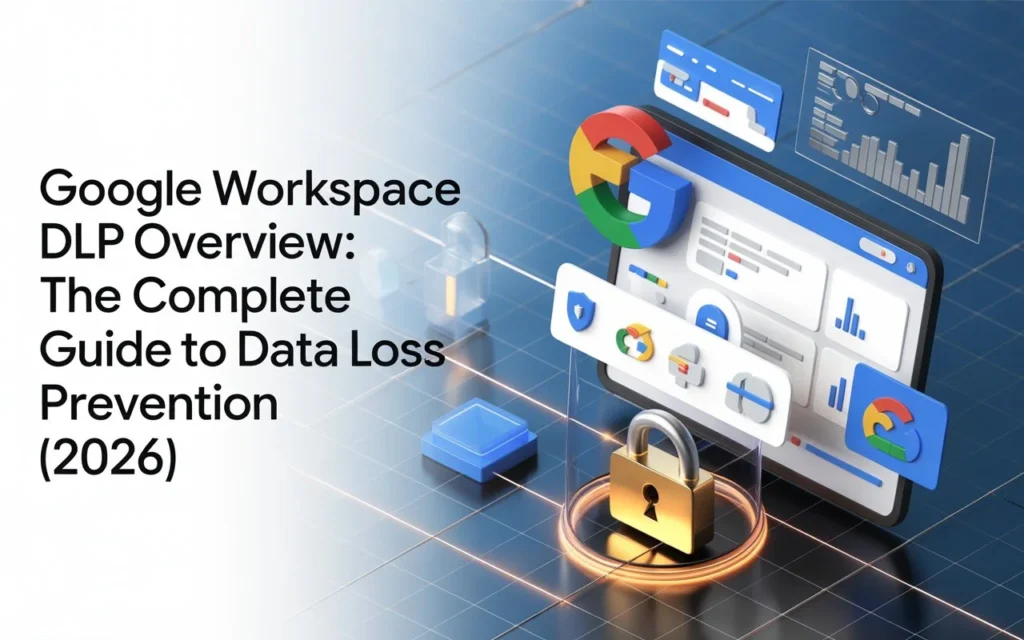
Google Workspace DLP (Data Loss Prevention) is a built-in security feature that helps admins detect, monitor, and block sensitive data from leaving your organization.

Think of it as a smart security guard. It reads inside your files and emails not just the file names and stops sensitive information from getting into the wrong hands.
It works across Gmail, Google Drive, and Google Chat. When a rule is triggered, it can block the action, warn the user, or alert your admin team instantly.
Simple concept. Powerful execution.
Why Your Business Needs Google Workspace Data Loss Prevention
Here’s a hard truth: most data leaks aren’t caused by hackers. They’re caused by your own team.
Research from the Ponemon Institute shows that negligence is the #1 cause of data breaches an employee accidentally sharing a spreadsheet, forwarding a confidential email, or setting a Drive folder to “Anyone with the link.”
DLP for Google Workspace protects you from three specific threats:
- Accidental leaks an employee shares the wrong file with an external contact
- Malicious insiders a departing employee downloads client data before leaving
- Compliance violations your organization mishandles HIPAA, GDPR, or PCI-DSS regulated data
Without data loss prevention, you’re flying blind. With it, every sensitive data movement is tracked, controlled, and auditable.
How Does Google Workspace DLP Work?
Here’s the Google Workspace DLP workflow broken down in plain English.
Step 1 Configure Your Rules Your admin logs into the Google Admin Console and creates a DLP rule. You define what counts as sensitive credit card numbers, Social Security numbers, passport data, or custom patterns unique to your business.
Step 2 Content Scanning Begins Google scans files and messages against your active rules. For Google Drive, scanning happens almost instantly after a file is created or modified. For Gmail DLP, outgoing messages are scanned before they’re delivered including the body, subject line, attachments, and headers.
Step 3 Enforcement Action When a violation is detected, your pre-configured action fires:
- Block the share or send entirely
- Warn the user with a custom message
- Quarantine the file for admin review
- Audit only log it silently (perfect for testing new rules)
Step 4 Review & Investigate Admins get alerts through the Security Alert Center. The Security Investigation Tool gives you a full picture who triggered it, which file, what data was detected, and what action was taken.
That’s the full Google DLP workflow in four clean steps.
Which Apps Does Google Workspace DLP Cover?
This is where most guides get lazy. Let’s be specific.
| Application | DLP Coverage | Notes |
| Google Drive | ✅ Full | Docs, Sheets, Slides, Forms |
| Gmail | ✅ Full (GA Feb 2025) | Outgoing emails + attachments |
| Google Chat | ✅ Full | Messages and file attachments |
| Google Meet | ❌ None | No native DLP scanning |
| Google Sites | ❌ None | No native protection |
For Google Drive DLP, supported file types include documents (.doc, .pdf, .xls), images (.jpeg, .png), compressed files (.zip, .rar), and many custom formats.
One thing nobody tells you: Google DLP only scans the first 1 MB of non-native files. Files over 50 MB may not be scanned at all. That’s a real gap and we’ll cover it shortly.
Gmail DLP: The Biggest Update of 2026
Here’s what your competitors haven’t told you yet.
In February 2026, Google made DLP for Gmail generally available. This is massive. Email was previously the #1 unprotected surface in Google Workspace security and now it’s fully covered.
Here’s what Gmail DLP can now do:
- Scan outgoing message body, subject lines, headers, and attachments
- Apply data protection rules at the domain, OU, or group level
- Block or warn users before the email is sent
- Show custom warning messages based on your company’s policies
- Unify with your existing Drive and Chat DLP rules one rule, three apps
Many admins confuse Gmail DLP rules with Gmail’s older Content Compliance rules. They’re not the same.
DLP rules are for detecting and blocking sensitive data exfiltration. Content Compliance rules are better for routing inbound emails to the right departments. Use each tool for what it was built for.
Google Workspace DLP Plans: Who Gets Access?
Not every plan includes DLP features. Here’s the clear breakdown:
| Plan | DLP Included? |
| Business Starter / Standard / Plus | ❌ No |
| Enterprise Standard / Plus | ✅ Yes |
| Education Fundamentals / Standard / Plus | ✅ Yes |
| Frontline Standard | ✅ Yes |
| Cloud Identity Premium | ✅ Yes (with Workspace license) |
If you’re on a Business plan, you don’t get native DLP. Your only option is adding Cloud Identity Premium or investing in a third-party DLP solution for Google Workspace.
💡 Need help setting up Google Workspace?
We’re certified Google partners offering 64% off + free professional setup ($2,000 value). Used by 151+ companies.
Get your quote →The Google Workspace DLP Limitations Nobody Talks About
This is the section your competitors skip. Don’t make the same mistake in your security strategy.
1. The 1 MB Scanning Cap Google Workspace DLP only scans the first 1 MB of non-native file content. Sensitive data buried deep in a large document? Completely invisible to your DLP rules.
2. File Comments Aren’t Scanned Someone shares confidential data inside a comment on a Google Doc. Google DLP won’t catch it. Comments are entirely outside the scanning scope.
3. No Cross-SaaS Protection Google Workspace data loss prevention works only inside Google’s ecosystem. Data flowing to Slack, Salesforce, or Jira? Zero visibility. Zero protection.
4. No AI Tool Coverage Users pasting sensitive data into ChatGPT, Gemini third-party integrations, or other generative AI tools? Native DLP has absolutely no awareness of this growing threat. This is the #1 emerging gap in Google Workspace security right now.
5. Rule Propagation Delays After creating a new DLP rule, it can take hours sometimes days to finish scanning all existing files. During that window, you think you’re protected. You’re not.
6. Log Retention Is Only 6 Months Google Drive audit logs are retained for just 6 months. For compliance investigations or long-term forensics, that’s rarely enough.
Google Workspace DLP vs. Third-Party DLP: Which Do You Need?
| Capability | Google Native DLP | Third-Party DLP |
| Gmail, Drive, Chat coverage | ✅ | ✅ |
| Cross-SaaS (Slack, Salesforce) | ❌ | ✅ |
| Full file scanning (no 1 MB limit) | ❌ | ✅ |
| Shadow AI / GenAI visibility | ❌ | ✅ |
| Long-term log retention | 6 months | 12–36 months |
| Cost | Included in Enterprise | Additional subscription |
Here’s the honest answer: Google’s native DLP is a solid foundation for organizations operating primarily within Google’s ecosystem.
But if you handle HIPAA, GDPR, or PCI-DSS regulated data or you use multiple SaaS tools you need a layered approach. Native DLP as your baseline, third-party coverage for the gaps.
Don’t pick one or the other. Stack them.
5 Google Workspace DLP Best Practices You Should Follow Today
1. Always Start in Audit Mode Never enforce a new rule immediately. Run it in Audit Only mode for at least two weeks. Catch false positives before they block legitimate work.
2. Use Sensitivity Labels With DLP Google Workspace’s automatic classification labels (Confidential, Internal, Public) integrate directly with DLP rules. Files labeled Confidential can automatically trigger stricter enforcement without writing custom detectors.
3. Scope Rules by Organizational Unit Your Legal team shares contracts externally every day. Your HR team almost never should. Apply DLP policies at the OU level not just domain-wide to match real-world workflows.
4. Write Educational Warning Messages When DLP blocks an action, tell users why. A custom warning message explaining your data governance policy turns a security block into a teaching moment.
5. Review Rules Every Quarter Business processes change. Data types evolve. A DLP rule that was accurate six months ago may now generate false positives or miss new patterns. Schedule quarterly DLP reviews no exceptions.
Quick Answers: Google Workspace DLP FAQs
Q: What is the Google Workspace DLP overview PDF?
A: Google’s official Google Workspace DLP overview PDF is available in the Google Admin Help Center and covers core DLP rules, setup steps, and supported applications.
Q: What is Google Workspace DLP pricing?
A: Google Workspace DLP pricing is included with Enterprise Standard, Enterprise Plus, Education, and Frontline Standard plans Business-tier users must upgrade to access it.
Q: What is DLP in Google Workspace?
A: DLP Google Workspace is a built-in security feature that detects and blocks sensitive data from being shared outside your organization across Gmail, Drive, and Chat.
Q: How does Gmail DLP work?
A: Gmail DLP scans outgoing emails including body, subject line, attachments, and headers in real time before the message is delivered.
Q: What is Google Cloud DLP?
A: Google Cloud DLP is a separate, developer-focused API service that inspects and de-identifies sensitive data across cloud storage, databases, and custom applications beyond just Google Workspace apps.
Q: Where do I configure DLP in the Google Admin Console?
A: In the Google Admin Console, navigate to Security → Access and Data Control → Data Protection to create and manage all your DLP rules.
Q: What was Gmail DLP beta?
A: Gmail DLP beta launched in April 2024, giving select admins early access to test data protection rules in Gmail before its full general availability release in February 2025.
Q: What are DLP rules in Google Workspace?
A: DLP rules are admin-configured policies that define what sensitive data to detect, which apps to scan, and what action to take block, warn, quarantine, or audit when a violation is found.
Final Thought
Google Workspace DLP is genuinely powerful. The February 2026 Gmail update closed one of its biggest gaps, and the unified rule system across Drive, Gmail, and Chat makes management much simpler.
But it’s not a complete solution. Know the limitations. Fill the gaps. And build a data security strategy that protects your organization across every tool your team actually uses not just the Google ones.
Start with Audit Mode. Tune your rules. Then expand from there.
Get Google Workspace at 64% Off
Same service. Better price. Professional setup included.
⭐⭐⭐⭐⭐ 151+ companies trust us
Partner Pricing:
• Business Starter: $3/month (Google: $8)
• Business Standard: $13/month (Google: $17)
• Business Plus: $20/month (Google: $26)
FREE:
Complete DNS setup + 24/7 support + USA IPs
15-user minimum | Setup in 24 hours