You’ve spent hours crafting the perfect LinkedIn message. You hit send. And then… crickets.
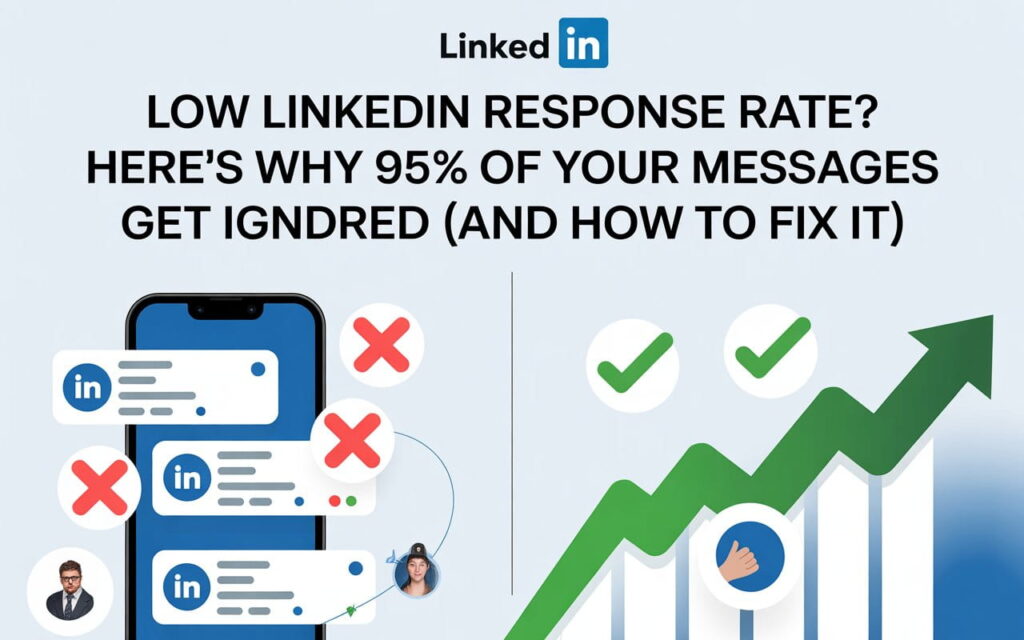
Sound familiar? You’re not alone. The harsh truth is that 90% of LinkedIn messages get completely ignored. But here’s the good news: it’s not you. It’s your strategy. Whether you’re doing cold outreach on LinkedIn or reaching out to warm leads, the principles remain the same
Let me show you exactly why your LinkedIn response rate is tanking—and the proven fixes that’ll get you replies starting today.
Why Your LinkedIn Outreach Is Failing (The Real Reasons)
Most people think their low LinkedIn response rate comes from bad luck or tough prospects. Wrong.
After analyzing over 20 million LinkedIn messages in 2025, we’ve discovered the real culprits. And they’re probably things you’re doing right now without realizing it.

Your Messages Look Like Everyone Else’s
Decision-makers receive 50-100 connection requests every single week. Yours needs to stand out immediately.
Generic templates scream “mass outreach.” People can spot them a mile away. Learn how to optimize your LinkedIn profile for lead generation to stand out before you even send a message. When your message starts with “I hope this finds you well” or “I saw your profile,” you’ve already lost.
The LinkedIn algorithm is smarter than you think. It actively filters repetitive content into the dreaded “Other” inbox where messages go to die.
You’re Pitching Before Building Trust
Here’s a mistake that kills response rates instantly: connecting with someone and immediately launching into a sales pitch.
Think about it. Would you buy from a stranger who walks up and starts selling before saying hello? Of course not.
LinkedIn users have developed a sixth sense for this. They’ll accept your connection request, see your pitch, and mentally file you under “spam.”
Your Timing Is All Wrong
Sending messages on Saturday morning? You’re wasting your time.
LinkedIn engagement follows predictable patterns. The data shows Tuesday and Wednesday between 10 AM-12 PM get the highest reply rates. Weekend messages? They sit unread until Monday when they’re buried under 50 new ones.
You’re Targeting the Wrong People
Not everyone on LinkedIn is your ideal prospect. Reaching out to C-level executives without a warm introduction? Your acceptance rate will be dismal.
The numbers don’t lie: mid-level managers respond 30% more often than CEOs. Why? They’re more accessible and have more time to engage.
What’s Actually Working in 2026: The Benchmarks You Need to Know
Let’s talk real numbers. Understanding what “good” looks like is crucial for measuring your success.
Current LinkedIn Response Rate Benchmarks
The average LinkedIn DM response rate sits at 10.3% in 2025. That’s actually 101% better than cold email, which barely hits 5.1%. Want to know which performs better? Check our detailed LinkedIn lead generation vs cold email comparison.
But here’s where it gets interesting:
Direct messages to first-degree connections? You’ll see a 16.86% response rate. That’s why building your network matters.
InMail messages perform worse at 3-8%, but can jump to 10-15% with strong personalization. You’re paying for those credits, so make them count.
What Top Performers Are Doing Differently
The best salespeople aren’t getting lucky. They’re hitting 20-30% response rates consistently.
Their secret? They’ve cracked the code on hyper-personalization and timing. They’re also using follow-up sequences that keep them top-of-mind without being annoying.
7 Proven Strategies to Fix Your Low LinkedIn Response Rate
Ready to turn things around? Here’s your action plan.
1. Master the Art of Personalization (The Right Way)
Forget adding someone’s name and calling it personalized. That’s kindergarten-level stuff.
Real personalization means researching your prospect. Check their recent posts. Look at their company’s latest news. Find genuine common ground.
Here’s what works: “Saw your post about the challenges of scaling SDR teams. We faced the same thing last quarter…”
This shows you’ve done your homework. It proves you’re not just another bot sending mass messages.
2. Optimize Your Profile Before You Reach Out
Your profile is your first impression. If it screams “salesperson,” you’re done.
LinkedIn users click on your profile before responding. What do they see? A professional headshot? A compelling headline? Social proof in your recommendations?
Your Social Selling Index (SSI) score matters more than you think. It affects how visible your messages are in the LinkedIn algorithm.
3. Write Messages That Actually Get Responses
Short wins. Keep your LinkedIn messages under 400 characters. Why? They get 22% better response rates than longer ones.
Your opening line determines everything. Skip the pleasantries. Lead with value or a compelling question.
Bad: “I’d love to connect and discuss how we help companies…”
Good: “Your company just expanded to Europe. How’s the hiring going for that region?”
See the difference? One’s about you. One’s about them.
4. Perfect Your Timing and Frequency
Send messages Tuesday through Thursday between 10 AM-12 PM. That’s when LinkedIn engagement peaks.
But here’s what most people miss: follow-up is where the real magic happens.
50% of sales happen after the fifth follow-up message. Yet most people give up after one or two attempts.
Space your follow-ups 2-5 business days apart. Each one should add new value—not just “checking in.”
5. Use AI Wisely (Not Blindly)
AI-powered personalization tools can boost your first message response rate to 4.19% compared to 2.60% without AI.
But here’s the catch: prospects can tell when it’s pure AI. The key is using AI for research and ideas, then adding your human touch.
Let AI find trigger events and gather intel. You write the actual message with personality and context.
6. Build Multi-Touch Sequences
One message isn’t enough. You need a system.
A proper outreach sequence includes:
- Connection request with personalized note
- Welcome message (add value, no pitch)
- Follow-up #1 (share useful resource)
- Follow-up #2 (ask thoughtful question)
- Follow-up #3 (soft CTA)
This approach respects your prospect’s time while keeping you visible.
7. Avoid These Response-Killing Mistakes
Some things will torpedo your LinkedIn response rate instantly.
Never send attachments in your first message. Don’t ask for endorsements from strangers. Stop using pushy language like “just following up” or “circling back.”
And for the love of all that’s holy, don’t connect and pitch in the same breath.
Industry-Specific Response Rates: What to Expect
Your LinkedIn response rate varies dramatically by industry.
Legal and professional services see the highest engagement at 7.28%. Healthcare follows at 6.85%. Meanwhile, manufacturing typically gets around 6.52%.
Why does this matter? Set realistic expectations. If you’re in SaaS sales, don’t beat yourself up for not hitting healthcare-level numbers.
Geography plays a role too. North American prospects respond at 6.71%, while Middle Eastern contacts sit at 5.39%.
Troubleshooting: What to Do When Nothing Works
Still struggling with a low response rate? Let’s diagnose the problem.
Run a Profile Audit
Is your profile complete and professional? No profile picture or vague headline? Fix that first.
Check your connection acceptance rate. If it’s below 30%, your profile needs work before you send another message.
Test and Iterate
A/B test your message templates. Try different opening lines. Experiment with message length. Track what works.
The key is measuring everything. You can’t improve what you don’t measure.
Know When to Walk Away
After three unanswered follow-ups, move on. Your time is valuable.
Focus your energy on prospects who engage. Build relationships with people who respond. That’s where real LinkedIn success happens.
The Bottom Line: Response Rates You Can Actually Achieve
Here’s what you should aim for in 2025:
10-15% response rate: You’re doing fine. Keep optimizing.
15-20% response rate: You’re above average. Double down on what’s working.
20%+ response rate: You’re in the top tier. Document your process.
Remember, a low LinkedIn response rate isn’t permanent. It’s a signal that your approach needs adjustment.
Focus on genuine personalization. Perfect your timing. Build multi-touch sequences that add value. And always, always think about your prospect first.
Take Action Today
Start small. Pick five prospects. Research them thoroughly. Craft personalized messages that offer real value.
Track your response rates. Adjust based on what you learn. And remember: every “no” gets you closer to a “yes.”
Your LinkedIn outreach can work. But only if you’re willing to do things differently than everyone else.
Stop sending generic messages. Start building real connections.