
Want to know why your LinkedIn outreach sequences aren’t working? You’re probably doing what everyone else does—sending generic connection requests and hoping for the best.
Here’s the truth: 92% of salespeople give up after four attempts. But buyers need at least seven touchpoints before they’ll take action.
That’s where a proper LinkedIn outreach sequence changes everything.
What Is a LinkedIn Outreach Sequences?
A LinkedIn outreach sequence is a planned series of messages and interactions designed to build relationships with prospects over time. Think of it as a conversation roadmap, not a sales pitch.
Unlike random one-off messages, sequences use multiple touchpoints spread over 10-16 days. You’re mixing formats—text, video, voice notes—to keep things fresh and engaging.
The goal? Start real conversations that lead to meetings.
Why LinkedIn Outreach Sequences Work Better Than Single Messages
Single messages get ignored. Outreach LinkedIn sequences get responses.
Here’s why: most decision-makers receive 40-50 LinkedIn messages every week. Your single message gets buried in seconds.
But when you show up consistently with value? You build familiarity. You earn trust. You stand out from the noise.
The data backs this up. LinkedIn outreach sequence best practices show reply rates between 35-62%, compared to just 10-15% for single messages.
The 5-Step LinkedIn Outreach Sequence Framework
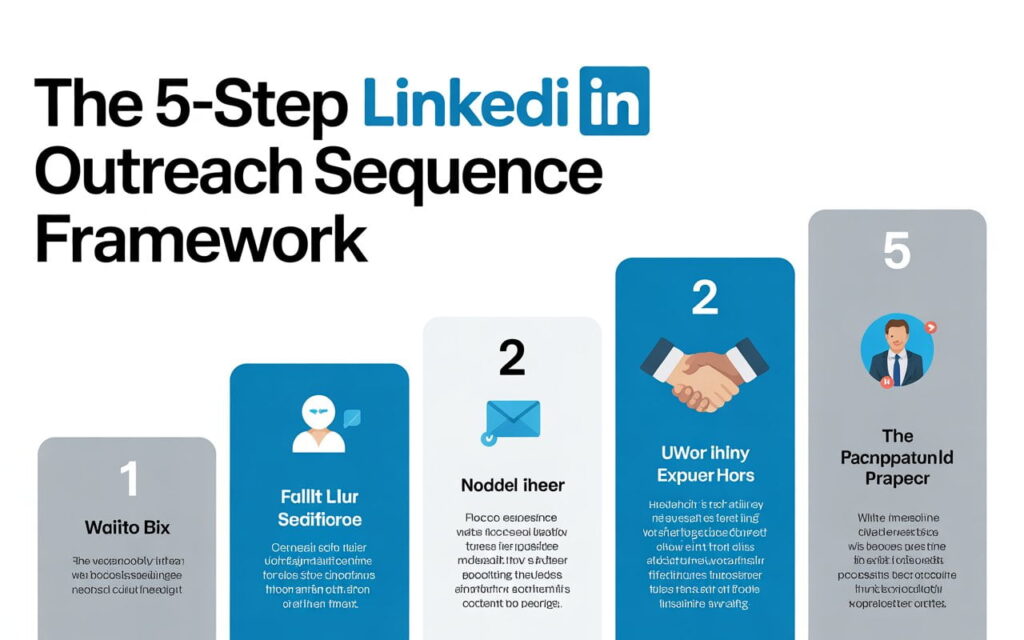
Let’s break down a proven LinkedIn sales sequence that actually works. This framework has generated 40%+ reply rates for B2B sales teams across industries.
Step 1: The Smart Connection Request (Day 0)
Your connection request needs two elements: a trigger and a teaser.
The trigger explains WHY you’re reaching out. The teaser hints at WHAT value you bring.
Template: “[Name], I noticed [specific trigger]. I’ve got [specific value] that helped [social proof]. Would love to connect.”
Example: “Michael, I saw your post about scaling your SDR team. I’ve got a framework that cut onboarding time by 45% for similar SaaS companies. Let’s connect!”
Keep it under 280 characters. LinkedIn truncates longer messages.If you’re unsure whether to use connection requests or InMail, read this detailed guide on LinkedIn InMail vs connection requests for outreach success
Pro tip: Research triggers using LinkedIn Sales Navigator, recent posts, or company news. Generic requests get declined 70% of the time.
Step 2: Profile View + Content Engagement (Day 2)
Once connected, don’t pitch immediately. That’s amateur hour.
Instead, view their profile again. They’ll see the notification. Then engage with their recent post—leave a thoughtful comment that adds value.
This creates two touchpoints without being salesy. You’re building familiarity through LinkedIn prospecting that feels natural.
Why it works: You’re demonstrating genuine interest before asking for anything. Reciprocity is powerful. Develop systematic engagement strategies with our LinkedIn content strategy for lead generation guide and optimize your LinkedIn profile to convert profile views into conversations.
Step 3: Personalized Video Message (Day 4)
Video is your secret weapon in any outreach campaign.
Record a 30-45 second personalized video using Vidyard or Loom. Mention something specific about them in the first three seconds.
Script structure:
- Hook: “Hey [Name], quick video for you…”
- Context: “I noticed [trigger]…”
- Value: “I wanted to share [specific benefit]…”
- CTA: “Interested? Just reply and I’ll send it over.”
Videos get 3x higher engagement than text-only LinkedIn messages. People remember faces, not words.
Best practice: Smile, use natural light, and keep it conversational. Don’t read from a script.
Step 4: LinkedIn Voice Note (Day 7)
Voice notes are criminally underused. Only 8% of people use them, which makes yours stand out instantly.
Open the LinkedIn mobile app. Tap the microphone icon in messages. Record for 45-60 seconds max.
Structure: Trigger → Question → Teaser → CTA
Example: “Hey Sarah, following up on my video about engineering hiring. Quick question—are you seeing better results from job boards or referrals right now? We just helped a fintech company fill three senior roles in 24 days. Worth a quick chat?”
Voice creates emotional connection. It’s harder to ignore someone’s actual voice than text.
Step 5: Final Value-Add Message (Day 10)
This is your last LinkedIn outreach touchpoint before moving to email.
Share something genuinely useful—a case study, industry report, or specific framework. No pitch, just value.
Template: “[Name], wanted to share this regardless of whether we work together. [Company] faced [similar challenge]. They used [approach] and saw [specific results]. Full breakdown here: [link]. If you want to discuss how this applies to [their company], my calendar is here: [link]. Either way, hope it’s useful!”
This positions you as helpful, not pushy. About 15-20% of prospects respond at this stage.
LinkedIn Outreach Sequence Best Practices for 2026
Want to maximize your reply rate? Follow these proven tactics:
Timing matters. Space touchpoints 2-3 days apart. Too frequent feels spam-like. Too slow loses momentum.
Personalize at scale. Use LinkedIn Sales Navigator to find triggers. Reference their content, job changes, or company news. Generic = deleted.
Mix your formats. Text → Video → Audio keeps engagement fresh. Don’t send five text messages in a row.
Track your metrics. Monitor connection acceptance rate (target: 65%+), reply rate (target: 35%+), and meeting booking rate (target: 15%+).
Stay compliant. LinkedIn limits you to 100-150 connection requests per week latest LinkedIn connection request limits and safe outreach thresholds Don’t use aggressive LinkedIn automation tools—they’ll get your account restricted.
Common Mistakes That Kill Your Outreach Sequences
Even smart salespeople make these errors:
Pitching too early. If your second message is a sales pitch, you’ve already lost. Build value first.
Being too generic. “I help companies like yours” means nothing. Be specific about WHO you help and WHAT results you deliver.
Not following up enough. Most responses come on touchpoint 4-7. Don’t give up after two attempts.
Ignoring mobile optimization. 57% of LinkedIn traffic is mobile. Keep messages short and scannable.
Skipping the research. If you can’t find ONE specific thing about them in 60 seconds, don’t send the connection request yet.
How to Personalize LinkedIn Outreach at Scale
You’re thinking: “This sounds great, but I need to reach 50+ people per week.”
Here’s the system:
Batch your research. Spend 30 minutes finding triggers for 10 prospects. Use Sales Navigator filters, recent posts, and company news alerts.
Create template frameworks. Write flexible templates with [brackets] for personalization points. Don’t write every message from scratch.
Use smart tools carefully. Tools like Expandi or Dux-Soup can automate profile views and connection requests. If you’re deciding between them, check out our detailed comparison of Expandi vs Dux-Soup to understand which tool is safer and more effective for your outreach.
But always personalize messages manually.
Time-block your outreach. Dedicate specific hours for sales outreach. Morning works best—decision-makers check LinkedIn before email.
The goal isn’t complete automation. It’s efficient personalization.
Multi-Channel Integration: Beyond Just LinkedIn
The best outreach sequences don’t live on LinkedIn alone.
After your LinkedIn sequence, pivot to email. Many prospects prefer email for detailed conversations.
Day 13-16 strategy: Send a “sign-off” email referencing your LinkedIn attempts. Include the value you promised anyway, with no pressure to respond.
Example subject line: “Signing off – [Name]”
This multichannel approach increases total reply rates by 25-40%. You’re meeting prospects where they prefer to engage.
Frequently Asked Questions
How many steps should a LinkedIn outreach sequence have?
Between 5-7 steps over 10-16 days works best. Fewer than 5 doesn’t provide enough touchpoints. More than 7 feels excessive.
What’s a good reply rate for LinkedIn outreach?
Target 35-45% reply rate and 15-20% meeting booking rate. If you’re below 25% replies, your messaging or targeting needs work.
Can I automate my entire LinkedIn sequence?
No. LinkedIn’s algorithm detects and penalizes pure automation. Automate profile views and connection requests, but personalize all messages manually.
How do I know if my sequence is working?
Track three metrics: connection acceptance rate (65%+ is good), reply rate (35%+ is excellent), and meetings booked (15%+ means you’re crushing it).
Your Action Plan
Here’s what to do right now:
Build a list of 20 ideal prospects. Research one specific trigger for each person. Send your first batch of connection requests using the trigger + teaser formula.
Remember—cold outreach isn’t about volume. It’s about starting real conversations with the right people.
Your LinkedIn outreach sequence should feel helpful, not salesy. Provide value first, ask second.
Start today. Need help building your sequences? Consider working with a LinkedIn outreach agency or review the best LinkedIn lead generation companies. Understanding LinkedIn lead generation costs will help you budget for success. Track your results. Adjust based on what works.
The prospects are waiting. Go start those conversations.