You’re posting on LinkedIn. You’re sharing insights. You’re even getting some likes.
But where are the leads?
Here’s the truth: most people treat LinkedIn like a blog. They post content and hope something magical happens. It doesn’t work that way.
Lead generation on LinkedIn needs a LinkedIn Content Strategy. Not just any strategy—one that turns scrollers into prospects and prospects into customers.
I’m going to show you exactly how to do it.

Why LinkedIn Crushes Other Platforms for B2B Lead Generation
Let’s start with the numbers.
LinkedIn generates 277% more leads than Facebook and Twitter combined. That’s not a typo. Nearly three times more.
Here’s why it works:
LinkedIn users are in work mode. They’re thinking about business problems. They’re looking for solutions. When someone scrolls LinkedIn, they’re mentally prepared for professional content.
Compare that to Instagram or Facebook. People there are looking at vacation photos and cat videos. They’re not thinking about buying your B2B solution.
The platform has 1.2 billion members. More importantly, 50% of users are decision-makers aged 25-34. These are the people who can actually buy what you’re selling.
And get this: 89% of B2B marketers say LinkedIn produces the highest quality leads. Learn more about B2B lead generation strategies Not just more leads—better leads.
The Fatal Mistake Most People Make
Here’s where everyone gets it wrong.
They focus on vanity metrics. Followers. Likes. Impressions. Those numbers feel good, but they don’t pay the bills.
You need to focus on lead generation metrics instead:
- How many qualified leads did you generate?
- What’s your cost per lead?
- How many leads converted to customers?
- What’s the revenue from LinkedIn-sourced leads?
For a deeper dive into tracking these numbers, check out our guide on LinkedIn lead generation cost
These are the numbers that matter.
Most content strategies fail because they’re not designed for conversion. They’re designed to look busy. Big difference.
The L.E.A.D.S. Framework: Your Content Strategy Blueprint
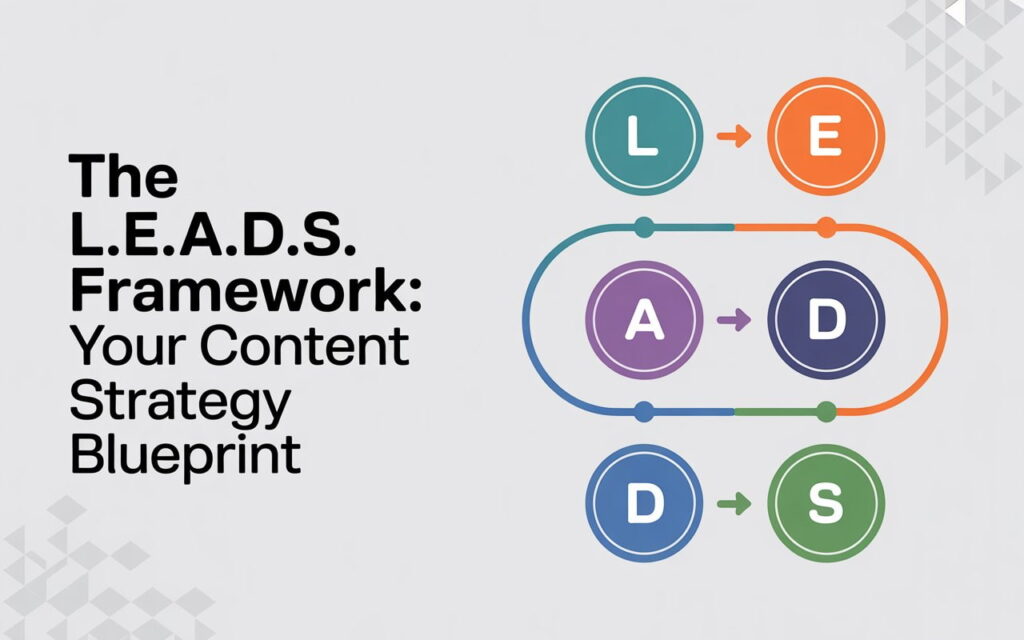
I’ve developed a system called the L.E.A.D.S. Framework. It’s five types of content that work together to generate leads.
Here’s how it works:
L – Lead Magnet Content
This content attracts your ideal prospects. You’re solving an immediate problem they have.
Think templates, checklists, or guides. But here’s the key: you gate it. People give you their email to get the resource.
Example: “Struggling with cold emails? Download our B2B email template library—39 templates with 47% response rates. Link in comments.”
If you’re using cold emails alongside LinkedIn, here’s how to write cold emails that get responses
That’s lead generation in action.
E – Educational Content
Now you’re building trust. You’re showing you know your stuff.
Share how-to posts. Break down complex topics. Show your process. The goal is to position yourself as the expert.
Include proof points. Statistics. Screenshots. Real results. End with a soft CTA like “Want help with this? DM me.” Master the art of LinkedIn cold outreach to turn DMs into conversations
A – Authority Content
This is where you share insights nobody else has.
Challenge conventional wisdom. Make bold predictions. Analyze trends. You’re showing you see things others miss.
Thought leadership isn’t about being loud. It’s about being right and being different.
D – Demand Generation Content
Create urgency. Show what prospects are missing by not solving their problem.
Share the cost of inaction. Show ROI calculators. Talk about limited opportunities. Make people realize they need to act now.
S – Social Proof Content
Remove objections. Share testimonials. Show before-and-after results. Display real metrics.
Video testimonials work best—80% better conversion than text. Use specific numbers, not vague claims.
7 LinkedIn Strategies That Generate Leads Fast
Let’s get tactical. Here are seven proven tactics you can start today.
If you want a deeper breakdown of how to generate consistent inbound leads without ads, here’s a complete guide on how to generate organic leads on LinkedIn that expands on these strategies with real execution steps.
Strategy #1: The “Comment for Resource” Technique
Post something valuable. Then ask people to comment a specific word to get it.
Why does this work? Two reasons.
First, comments boost your post in the algorithm. More engagement means more reach.
Second, you can DM everyone who comments. That starts a conversation. That’s where lead generation happens.
Expected conversion: 8% of commenters become leads.
Strategy #2: LinkedIn Live Q&A Sessions
Go live once a week. Answer questions for 20-30 minutes.
LinkedIn prioritizes live content in feeds. You’ll get more visibility than regular posts.
Offer a special resource to people who stay until the end. Announce it at the start so they don’t leave.
Average conversion: 12% of attendees become qualified leads.Combine this with proven LinkedIn event marketing strategies to maximize attendance and lead conversion:
https://leadsmonky.com/linkedin-event-marketing/
Strategy #3: The Documentary Approach
Document your work in real-time. Show your process. Share your wins and losses.
People trust authenticity. They want to see behind the curtain.
Post a weekly series about a client project or your own business. Keep people following along.
Then offer the complete playbook as a lead magnet.
Strategy #4: Weekly Office Hours
Pick a consistent time each week. Post: “Office Hours are open for the next 2 hours. Drop your questions about [topic] below.”
Answer every question publicly. Provide real value. Then end with your service offer.
This positions you as accessible and helpful. Both drive conversions.
Strategy #5: Data-Driven Posts
Share original data. Statistics. Research findings.
Data posts get shared more than any other content type. They position you as an authority.
Survey your customers. Analyze your data. Compile industry stats. Turn them into visual posts.
Offer the full report as a lead generation tool.
Strategy #6: LinkedIn Newsletter Strategy
Start a LinkedIn newsletter. It creates an owned audience you can message directly.
The algorithm doesn’t matter for newsletters. Subscribers see every issue.
Promote subscriber-only benefits. Exclusive templates. Early access. Special offers.
Newsletter subscribers convert to customers at 2.3X the rate of regular followers. Build your complete LinkedIn lead generation funnel to nurture these subscribers
Strategy #7: Strategic Commenting
Engagement isn’t just about your posts. Comment strategically on others’ content.
Spend 15-30 minutes daily commenting on posts from your target audience. Provide value in your comments. Add insights, not just “Great post!”
This puts you in front of prospects consistently. Many will check out your profile. That’s where your lead generation system takes over.
Optimize Your Profile for Conversion
Your profile is your landing page. Here’s our complete LinkedIn profile optimization for lead generation checklist.
Your content drives profile visits. But if your profile doesn’t convert, you’re wasting traffic.
Here’s what needs to be optimized:
Your headline: Don’t just list your job title. State the value you provide.
Bad: “Marketing Manager at ABC Company”
Good: “I help B2B SaaS companies generate 50+ qualified leads monthly through LinkedIn | 300+ companies helped”
Your About section: Follow this structure—Problem you solve, how you solve it, proof it works, clear CTA.
Featured section: Add your best lead magnets. Case studies. Testimonials. Make it easy for visitors to take the next step.
Custom button: Use it. “Download Free Guide” or “Book a Strategy Call” beats “Connect” any day.
Measuring What Actually Matters
Track these metrics weekly:
Lead volume: Total leads and qualified leads
Lead quality: Conversion rate to opportunity
Content performance: Which posts generate leads
Cost per lead: Include your time investment
Revenue: Actual dollars from LinkedIn-sourced customers
Forget about follower counts. Focus on revenue metrics.
Here are the 2025 benchmarks:
Organic LinkedIn: 3-8% connection-to-lead conversion rate
Paid LinkedIn: $75-$150 average cost per lead (varies by industry)
Video content: 31% higher lead conversion than text posts
Lead Gen Forms: 3X higher conversion than landing pages
Common Mistakes Killing Your Lead Generation
Let me save you some time. Avoid these:
Selling too soon: You haven’t earned the right yet. Follow the 5:1 rule—five value posts for every sales post.
Posting inconsistently: The algorithm favors consistency. Post 3-5 times weekly minimum.
Targeting too broad: “We help businesses grow” means nothing. Get specific about who you help and how.
Ignoring lead nurture: Generating leads is step one. You need a follow-up system. Mix automated sequences with personal outreach.
Not testing: What works for others might not work for you. A/B test everything. Double down on winners.
Your Week-by-Week Action Plan
Here’s how to start:
Week 1:
Define your ideal customer profile. Optimize your LinkedIn profile. Set up tracking systems.
Week 2:
Create your first lead magnet. Plan two weeks of content using the L.E.A.D.S. Framework. Design your Lead Gen Form.
Week 3:
Post your first piece of content. Engage on 10+ posts daily. Respond to every comment within 2 hours.
Week 4:
Analyze what’s working. Double down on top-performing content. Launch your LinkedIn newsletter.
By month three, you should see 20-50 qualified leads if you’re executing consistently.
The Bottom Line
LinkedIn content strategy for lead generation isn’t complicated. But it does require a system.
Most people post randomly and hope for the best. You’re not going to do that.
You’re going to use the L.E.A.D.S. Framework. You’re going to focus on metrics that matter. You’re going to optimize every step of the funnel.
The brands winning on LinkedIn in 2026 aren’t those with the biggest budgets. They’re the ones who show up consistently with valuable content.
Start with one strategy from this guide. Implement it fully this week. Then add the next one.
That’s how you build a LinkedIn lead generation machine that compounds over time.
Ready to start? Pick your first lead magnet. Create it today. Then promote it with your next post.
Your future customers are scrolling LinkedIn right now. Make sure they find you.