You’ve probably heard both terms thrown around in the same breath.
“Just do cold email.” “No, build your email list.” “Try email marketing.” “Cold outreach is dead.”
Everyone has an opinion. Few people give you the full picture.
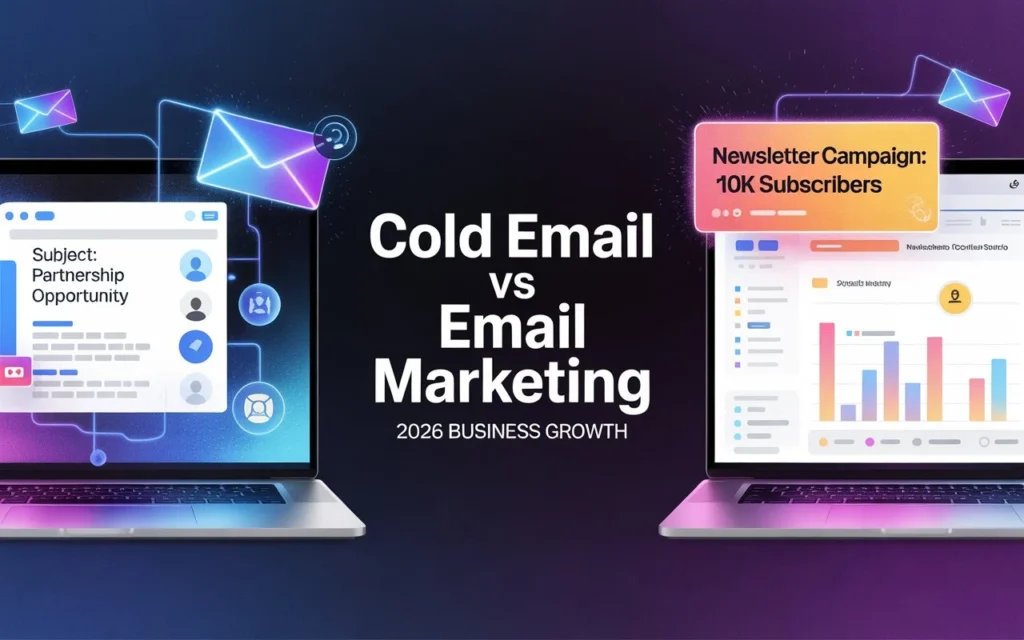
Here’s the truth: cold email vs email marketing isn’t a battle. They’re two different tools built for two different jobs. Use the right one at the right time and your business grows. Mix them up and you’ll waste months with nothing to show for it.
If you’re deciding between outreach channels, this breakdown of cold email vs LinkedIn lead generation will help you choose the right strategy:
http://leadsmonky.com/linkedin-lead-generation-vs-cold-email/
Let’s fix that right now.
What Is Cold Email? (And What Makes It Different)
Cold email is a direct, one-to-one outreach message sent to someone who has never interacted with your business before. No prior relationship. No sign-up. No permission granted.
Think of it like walking up to someone at a conference and introducing yourself. You don’t know them. They don’t know you. But if your opening line is sharp and relevant the conversation starts.
Cold email is used by B2B sales teams, agencies, consultants, and recruiters. Its goal isn’t to sell on the first touch. It’s to start a conversation that could eventually become a sale.
The best cold emails are short, personalized, and hyper-targeted. They reference the prospect’s specific role, company, or pain point. They never feel like a blast.
What Is Email Marketing? (And Where It Shines)
Email marketing is permission-based communication sent to people who have actively signed up to hear from you. These are subscribers, customers, and warm leads people who already know your brand exists.
Email marketing is a relationship engine. You nurture your audience over time with valuable content, updates, and offers. You’re not starting a conversation you’re continuing one.
E-commerce brands, SaaS companies, content creators, and B2C businesses use email marketing to drive purchases, retain customers, and build brand loyalty.
The key word here is permission. Without it, you’re not doing email marketing. You’re doing spam.
Cold Email vs Email Marketing: The Core Difference in One Sentence
Cold email builds new relationships from scratch. Email marketing deepens relationships that already exist.
That one sentence should guide every decision you make about which strategy to use.
Cold Email vs Email Marketing: 7 Key Differences
Let’s break this down clearly. No fluff, just the facts you actually need.
1. Audience Cold email targets strangers who fit your ideal customer profile (ICP) but have never heard of you. Email marketing targets opted-in subscribers who already know your brand.
2. Permission Cold email doesn’t require prior consent but it must meet legal standards (more on that below). Email marketing always requires explicit opt-in. No exceptions.
3. Goal Cold email’s goal is to start a conversation book a call, get a reply, open a door. Email marketing’s goal is to nurture, convert, and retain.
4. Format Cold emails are short, plain-text, and personal. They look like a message from a real human. Email marketing campaigns can use HTML design, long-form content, branded templates, and images.
5. Volume Cold email is low-to-medium volume. Quality matters more than quantity. Email marketing can reach thousands or millions of subscribers in a single send.
6. Tools For cold outreach, you use dedicated tools like Instantly, Lemlist, Apollo, or Woodpecker. For email marketing, you use platforms like Mailchimp, ActiveCampaign, Klaviyo, or ConvertKit. These are NOT interchangeable more on that in a moment.
7. Success Metrics Cold email is measured by reply rate and booked meetings. Email marketing is measured by open rate, click-through rate (CTR), and revenue per email.
Real Benchmarks: What Should You Actually Expect?
Most articles throw around numbers without context. Let’s fix that.
Cold Email Benchmarks (2026)
A well-targeted cold email campaign with proper infrastructure can achieve 40–60% open rates because these emails land in personal inboxes, not promotional tabs.
But reply rates tell the harder truth. Industry average sits at 1–5% reply rate. Top-performing, hyper-personalized campaigns can reach 15–30%.
Gong’s 2026 research found it takes roughly 344 emails to book one meeting on average. That sounds brutal until you realize one meeting at a $20,000 deal size makes it extremely worthwhile.
For context: Leads Monky, a B2B cold email agency, consistently achieves a 3.2% reply rate against an industry average of just 0.5%. Across 10,000 personalized emails sent monthly per client, that translates to 10–15 qualified consultations booked every month. Their results aren’t magic they’re infrastructure, targeting, and real personalization working together.
Email Marketing Benchmarks (2026)
Email marketing averages a 26.76% open rate across all industries (Mailchimp, 2026). Click-through rates average 2.33%.
The ROI is where email marketing dominates every other channel. According to Litmus, email marketing delivers $36 for every $1 spent. That’s higher than SEO, paid ads, and social media combined.
The catch? You need an existing audience to see those returns. If your list is empty, the ROI is zero.
Email Marketing vs Cold Calling: Which Wins in 2026?
Here’s where it gets interesting because a lot of businesses are asking this question too.
Cold calling is the oldest prospecting tool in the book. You dial a number, interrupt someone’s day, and pitch in real time. It still works in certain industries. But the numbers are rough.
The average cold call connect rate has dropped to 2–5%. Decision-makers screen calls. Gatekeepers block them. Most people simply don’t answer numbers they don’t recognize.
Email marketing vs cold calling isn’t even a close comparison anymore for most B2B businesses. Email gives your prospect time to think, read, and respond on their terms. Cold calling demands immediate attention they’re rarely willing to give.
Cold email vs cold calling is a tighter race but cold email wins on scalability. You can send 300 cold emails in the time it takes to make 10 cold calls. Cold email also creates a written record, allows for multi-touch sequencing, and doesn’t require a sales rep to be on the phone.
That said, cold calling vs email marketing isn’t always zero-sum. Some of the highest-performing B2B teams combine cold email with a follow-up call using the email to warm the prospect first, then calling when there’s context. That combination consistently outperforms either channel alone.
Bottom line: For most B2B businesses in 2026, cold email and email marketing outperform cold calling on cost, scalability, and ROI. But cold calling still has a place in high-ticket, relationship-driven sales.
💡 Struggling with cold email deliverability?
We’ve built cold email infrastructure for 50+ B2B companies—achieving 40-60% open rates and 10-15 consultations monthly.
See how we can help →Is Cold Emailing Legal? (What You Must Know)
This section makes most articles nervous. It shouldn’t. The rules are clear you just need to know them.
CAN-SPAM Act (United States)
Cold emailing is legal in the US under the CAN-SPAM Act (2003), as long as you include your real business name and address, a clear opt-out mechanism, an accurate subject line, and non-deceptive sender information. Violations can cost up to $50,120 per email. That’s not a typo.
GDPR (European Union)
Cold email to EU residents is legal only if you have a legitimate business interest meaning your message must be relevant to the recipient’s professional role and they must reasonably expect to be contacted. B2C cold emailing to EU individuals without prior consent is generally prohibited.
CASL (Canada)
Canada has the strictest rules. Random cold outreach to Canadians without prior consent is high-risk. Proceed carefully.
The most expensive mistake businesses make? Sending cold emails through Mailchimp or ActiveCampaign. Those platforms explicitly prohibit cold outreach in their Terms of Service. Your account gets terminated. Always use a dedicated cold email tool never your email marketing platform.
Pros and Cons: Cold Email vs Email Marketing
Cold Email
Pros: Reaches decision-makers no other channel can touch. Low startup cost. Doesn’t require an existing audience. Can generate a $50,000 deal from one reply.
Cons: Low average reply rates (1–5%). High risk of domain blacklisting if done wrong. Requires ongoing deliverability management. Legal complexity across regions.
Email Marketing
Pros: Highest ROI of any marketing channel ($36 per $1 spent). Audience already trusts you. Automation handles scale. Builds a compounding long-term asset your list.
Cons: Requires an existing opted-in audience. List building takes time and investment. Inbox competition is fierce. Subscribers go cold if you don’t engage them consistently.
When Should You Use Cold Email?
Use cold email when:
- You’re a B2B company with a clearly defined ICP
- You need pipeline fast and have no existing audience
- You’re targeting executives, founders, VPs, or hiring managers
- Your average deal size is $5,000 or more
- You’re entering a new market or geography
- You’re doing agency outreach, link building, or partnership development
This is exactly where Leads Monky specializes. They build and manage done-for-you cold email systems for B2B service providers consulting firms, agencies, professional services, SaaS companies where the average deal size justifies the investment.
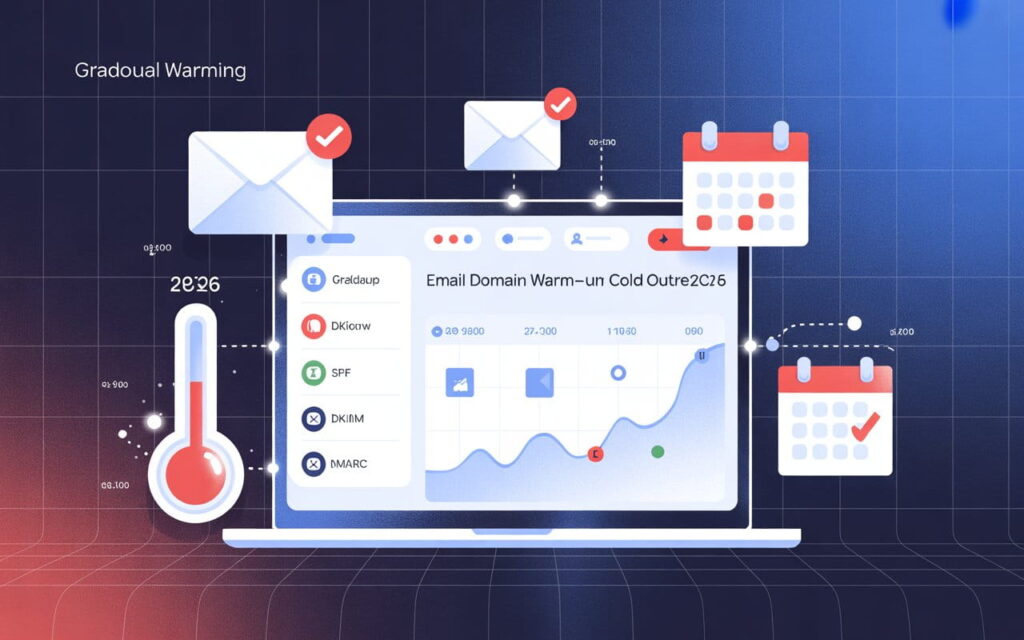
Their 4-step system (infrastructure setup → prospect research → campaign writing → launch and optimization) gets clients from zero to 10–15 qualified consultations per month within 60 days. They use 10 dedicated sending domains, 30 email accounts, SPF/DKIM/DMARC authentication, and a 14-day domain warmup all the technical work that most businesses skip and then wonder why their emails land in spam.
If you’re a B2B business with a $10K+ deal size and a clear target audience, Leads Monky’s cold email campaigns are worth a serious look.
When Should You Use Email Marketing?
Use email marketing when:
- You have an existing list of 500+ opted-in subscribers
- You run an e-commerce store, SaaS product, or content brand
- You’re nurturing leads who aren’t ready to buy yet
- You’re launching a product, course, or major promotion
- You want to build long-term customer retention and loyalty
- You’re re-engaging past customers or lapsed users
For email marketing, platforms like ActiveCampaign, Klaviyo, and ConvertKit give you the automation, segmentation, and analytics you need to convert subscribers into paying customers at scale.
The Smartest Move: Use Both Together
Here’s the strategic insight that most comparison articles completely miss.
Cold email and email marketing aren’t rivals | they’re a sequence.
The best B2B growth systems use cold email at the top of the funnel and email marketing throughout the middle and bottom.
Here’s how it works in practice:
Step 1 Cold Email (Acquisition): Identify 500 companies matching your ICP. Send a personalized cold email sequence (3–5 touches over 2–3 weeks) with a relevant, valuable opening offer. To manage multiple sequences or domains efficiently, you can use our cheap email inboxes for outreach these integrate seamlessly with Google Workspace and multi-domain setups.
Step 2 Lead Magnet (The Bridge): Instead of asking for a sales call immediately, offer something valuable a free audit, report, or template. When they claim it, they opt in to your email list.
Step 3 Email Marketing (Nurture): They’re now in your email marketing automation. Over 30–60 days, they receive case studies, social proof, and educational content that moves them toward a buying decision.
Step 4 Conversion: By the time your team follows up, they’ve had 8–10 touchpoints. Close rates on these leads are dramatically higher than pure cold pipeline.
Cold email fills the funnel. Email marketing converts it. Together, they form a growth engine that compounds over time.
Quick Decision Guide: Which One Do You Need Right Now?
No existing audience + B2B + need pipeline fast? → Start with cold email.
Existing list of 500+ subscribers? → Invest in email marketing automation.
Have both? → Run cold email for acquisition and email marketing for nurture simultaneously.
Selling B2B services with $10K+ deal sizes? → Book a strategy call with Leads Monky and let experts build your system.
Frequently Asked Questions
What is the difference between cold email and email marketing?
Cold email reaches strangers to start new conversations; email marketing nurtures people who already opted in to hear from you.
What is the 30/30/50 rule for cold emails?
30% depends on your email content, 30% on list targeting quality, and 50% on your follow-up sequence because most replies come after the first touch.
Is cold emailing illegal?
No ,cold emailing is completely legal in the US under CAN-SPAM and in the EU under GDPR, as long as you include a clear opt-out and don’t use deceptive subject lines.
What is the 80/20 rule in email marketing?
Send 80% valuable, educational content and only 20% promotional emails so subscribers stay engaged and actually open your sales emails when they arrive.
What is a good example of a cold email?
A 3-sentence email that references something specific about the prospect, names one pain point they likely have, and ends with a single low-friction ask like a 15-minute call.
What is the 3 email rule?
Send your initial email plus two follow-ups if there’s still no response, either switch channels or send a short breakup email to close the loop.
Is cold emailing worth it?
Yes for B2B businesses with deal sizes over $5,000 and a clearly defined target audience, cold email consistently delivers one of the highest ROI of any outbound channel.
What are the four types of email marketing?
Newsletter emails, promotional emails, transactional emails, and behavioral/lifecycle emails each serving a different stage of the customer journey.
Does cold email marketing still work?
Yes personalized, properly sequenced cold email campaigns still achieve 40–60% open rates and 15–30% reply rates when sent to the right people with the right message.
What are the three C’s of cold calling?
Connect, Communicate, and Convert get the right person on the line, say something relevant, and immediately follow up to turn the conversation into a booked meeting.
The Bottom Line
Cold email and email marketing are not the same thing. They serve different stages of the customer journey, require different tools, follow different legal rules, and measure success differently.
Cold email is your weapon for B2B lead generation when you have no existing audience. Email marketing is your engine for converting and retaining the audience you’ve built.
The businesses growing fastest in 2026 don’t choose one. They use cold email to fill the top of the funnel and email marketing to close and retain everyone who enters it.
If you’re a B2B service provider ready to stop waiting on referrals and start generating consistent, qualified pipeline, Leads Monky builds and manages the entire cold email system for you. From domain infrastructure to personalized sequences to reply management they handle it. You show up to the calls.
10 booked consultations in 60 days, or they work for free.
Ready to Fix Your Cold Email?
🛡️ We guarantee 10 consultations in 60 days or work free.
⭐⭐⭐⭐⭐ 50+ clients | 2.4M emails sent | 3.2% reply rate
What you get:
✅ Complete infrastructure (30 emails, 10 domains)
✅ 10,000 personalized emails monthly
✅ First consultations in 5-6 weeks
2 spots left for February 2026