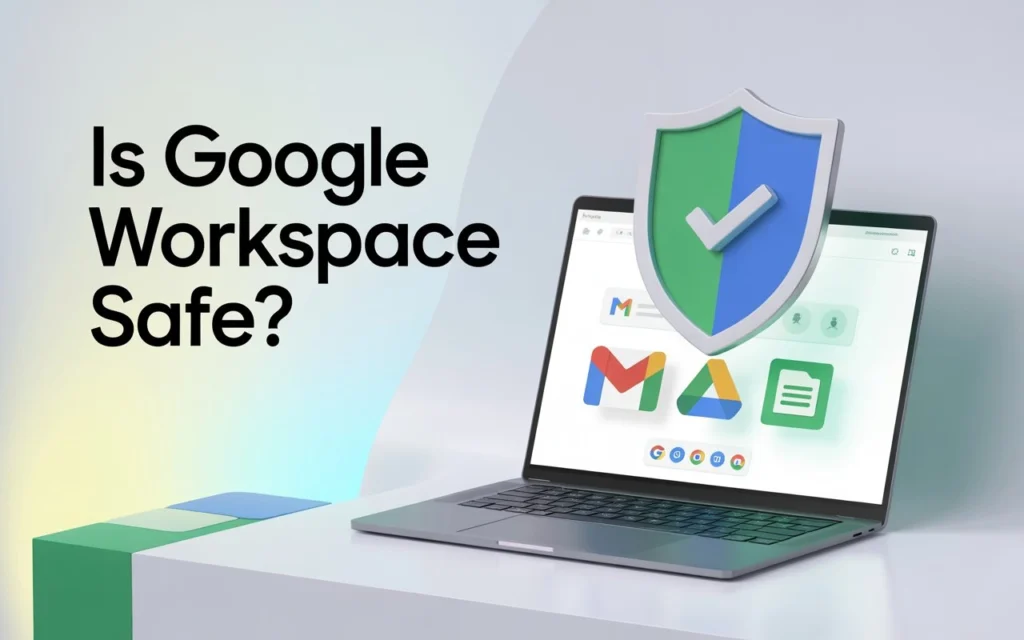
You’re considering Google Workspace for your business. Smart move. But there’s one question keeping you up at night: is Google Workspace safe enough for your company’s sensitive data?
I get it. You’re about to trust this platform with customer information, financial records, and confidential communications. One wrong move could mean a data breach that costs you everything.
Here’s the truth: Google Workspace security is solid—but only if you configure it correctly. And most businesses don’t.
Let me walk you through everything you need to know about Google Workspace safety. No fluff. Just the facts that’ll help you make the right decision.
Is Google Workspace Safe for Business? The Short Answer
Yes, Google Workspace is safe—but with conditions.
Google invests billions in security. They’ve got encryption, two-factor authentication, and a 99.9% uptime guarantee. Their data protection meets industry standards like GDPR, HIPAA, and SOC 2.
But here’s what they don’t advertise: Google Workspace safe doesn’t mean “set it and forget it.”
You share responsibility for security. Google protects the infrastructure. You protect how your team uses it.
Think of it like a bank vault. The vault’s secure. But if you leave the door wide open? That’s on you.
The Real Security Risks Most Businesses Miss
Let’s talk about what actually goes wrong.
Phishing Attacks Still Work
Google Workspace blocks 99.9% of phishing attempts. But attackers only need that 0.1% to succeed.
I’ve seen companies lose six figures because one employee clicked a fake Google login page. The email looked perfect. The domain? Almost identical. One wrong click and the attacker owned their entire Gmail account.
Solution: Enable Advanced Phishing Protection and train your team monthly. Not once during onboarding—monthly.
Weak Password Security
You’d be shocked how many businesses still use “Company123!” as their password.
Google Workspace doesn’t force strong passwords by default. If you don’t set password complexity requirements, employees will take shortcuts.
Solution: In your admin console, enforce minimum 12-character passwords with special characters. Better yet, require MFA (multi-factor authentication) for everyone.
Third-Party App Nightmares
Google Workspace lets employees connect hundreds of third-party apps. Most are fine. Some are disasters waiting to happen.
I’ve audited companies with 50+ connected apps nobody even remembers authorizing. Each one has access to Drive, Gmail, or both.
Solution: Review OAuth app permissions quarterly. Remove anything you don’t actively use.
Data Sharing Gone Wrong
Google Drive makes sharing stupidly easy. That’s great for collaboration. Terrible for security.
One “Share with anyone” link sent to the wrong person means your confidential data is public.
Solution: Set default sharing permissions to “Restricted” in your admin panel. Make employees manually choose external sharing each time.
💡 Need help setting up Google Workspace?
We’re certified Google partners offering 64% off + free professional setup ($2,000 value). Used by 151+ companies.
Get your quote →How Secure Is Google Workspace Compared to Competitors?
Let’s put Google Workspace security head-to-head with Microsoft 365.
Google Workspace wins on simplicity. Their security settings are easier to understand. Microsoft 365 offers more granular control—but you’ll need an IT degree to configure it properly.
For small businesses, Google Workspace safe features are more accessible. You don’t need a dedicated security team to lock things down.
For enterprises needing complex compliance? Microsoft 365 edges ahead with advanced DLP (Data Loss Prevention) and conditional access policies.
Here’s my take: if you’re under 50 employees, Google Workspace security gives you everything you need without the complexity.
Google Workspace Safe for HIPAA and Compliance?
Absolutely—with the right plan.
Google Workspace offers HIPAA compliance, but you need Business Plus or Enterprise. The cheaper plans don’t include required features like Vault and advanced admin controls.
You’ll also need to sign a Business Associate Agreement (BAA) with Google. This legally obligates them to protect patient data.
Same goes for GDPR, SOC 2, and other frameworks. Google Workspace supports them all—if you configure settings correctly.
Important: Compliance isn’t automatic. You still need to implement proper access controls, encryption practices, and audit logging.
The Biggest Security Upgrade Nobody Uses
Want to know the easiest way to make Google Workspace safer?
Turn on Context-Aware Access.
This feature (available in Enterprise plans) blocks logins from untrusted devices or suspicious locations. Employee traveling to Belarus? Their access gets restricted until they verify identity.
It’s like having a smart bouncer at your digital front door.
Most companies never enable it because they don’t know it exists.
Is Google Workspace Safe from Ransomware?
Ransomware can’t directly encrypt files in Google Drive—they’re stored on Google’s servers, not your local machine.
But attackers can still delete or move files if they compromise an account with proper permissions.
Google Workspace includes Version History for up to 30 days (100 days with Vault). If someone deletes everything, you can restore it.
Pro tip: Enable two-step verification. 99% of ransomware attacks targeting Google Workspace fail when MFA is active.
What About Data Privacy? Does Google Scan Your Emails?
Here’s where things get interesting.
Google doesn’t scan Gmail for ads in Google Workspace accounts. That ended years ago.
They do scan for malware, phishing, and spam. That’s actually protecting you.
But yes, Google’s systems technically process your data to provide services. If that makes you uncomfortable, you need end-to-end encryption from a different provider.
For most businesses? The tradeoff is worth it. Google’s automated threat detection stops attacks you’d never catch manually.
The Smart Way to Buy Google Workspace and Save Money
Here’s something most articles won’t tell you: you’re probably overpaying for Google Workspace.
Buying directly from Google works. But authorized resellers like Leads Monky offer the exact same service at up to 64% off.
Leads Monky is an official Google Cloud Partner. That means:
- Same Google Workspace service, same security standards
- Business Starter at $2.50/user instead of $8.40 direct from Google
- Free professional setup including SPF, DKIM, and DMARC configuration
- 24/7 support that actually responds (not Google’s generic help desk)
- USA-based IP addresses for better email deliverability
You get complete admin ownership. They configure everything properly, hand over the keys, and you’re done.
For a 10-person team, that’s over $700 saved annually. For 50 employees? You’re saving $3,500+ per year.
Get your discounted Google Workspace quote from Leads Monky →
Why pay full price when authorized resellers offer wholesale pricing with better support?
8 Steps to Make Google Workspace Safer Right Now
Ready to lock down your account? Here’s your action plan.
1. Enable Two-Factor Authentication Immediately
Go to Admin Console → Security → Authentication → 2-Step Verification.
Set it to “On for everyone.” No exceptions.
Use hardware security keys for admins. They’re unphishable.
2. Review Admin Permissions
Limit Super Admin accounts to 2-3 people maximum.
Create role-based access for others (Help Desk Admin, Groups Admin, etc.).
Less access means less risk if an account gets compromised.
3. Configure Data Loss Prevention (DLP)
Set up rules to detect credit cards, social security numbers, and confidential data.
Block external sharing of files containing sensitive information.
DLP isn’t perfect but catches most accidental leaks.
4. Lock Down Sharing Defaults
Set Google Drive default sharing to “Restricted.”
Require employees to manually choose external sharing.
This simple change prevents 90% of accidental data exposure.
5. Audit OAuth Apps Quarterly
Security → API Controls → Manage third-party app access.
Remove anything unused or suspicious.
One malicious OAuth app can drain your entire Drive.
6. Enable Security Health Recommendations
Google’s Security Health page shows exactly what needs fixing.
Address every critical recommendation within 48 hours.
It’s like having a free security consultant.
7. Turn On Advanced Phishing Protection
Apps → Gmail → Safety → Identify external emails.
This adds banners to messages from outside your organization.
Simple visual cue, massive impact on phishing click rates.
8. Implement Mobile Device Management
Require device encryption for accessing Google Workspace.
Set up remote wipe for lost devices.
Lost phone shouldn’t mean lost data.
When Google Workspace Security Isn’t Enough
Google Workspace covers 90% of businesses perfectly.
But if you’re handling classified government data, financial trading systems, or medical records at scale, you need additional security layers.To fully protect your business, you should implement [Google Workspace security solutions] that provide advanced threat detection, data protection, and complete visibility across your environment.
Consider:
- CASB (Cloud Access Security Broker) solutions
- End-to-end encryption add-ons
- Advanced threat protection platforms
- Zero trust network architecture
For everyone else? Google Workspace with proper configuration is more than sufficient.
Final Verdict: Is Google Workspace Safe for Your Business?
Yes, Google Workspace is safe—when configured correctly.
The platform itself is enterprise-grade. Google invests heavily in security, compliance, and data protection.
The weak link? Usually human error and poor configuration.
Here’s what you need to do:
- Enable MFA for everyone
- Configure admin controls properly
- Train employees on phishing and security best practices
- Review sharing permissions regularly
- Audit third-party apps quarterly
Do these five things and Google Workspace becomes remarkably secure.
And if you’re ready to make the switch? Don’t overpay.
Get Google Workspace at 64% off through Leads Monky →
You’ll get the same Google Workspace service with professional setup, better support, and massive savings.
Same security. Better price. Smarter choice.
Get Google Workspace at 64% Off
Same service. Better price. Professional setup included.
⭐⭐⭐⭐⭐ 151+ companies trust us
Partner Pricing:
• Business Starter: $3/month (Google: $8)
• Business Standard: $13/month (Google: $17)
• Business Plus: $20/month (Google: $26)
FREE:
Complete DNS setup + 24/7 support + USA IPs
15-user minimum | Setup in 24 hours