

Quick Answer
Google Workspace consultants are firms or specialists who help businesses plan, migrate to, secure, and optimize Google Workspace, often including services like security audits, compliance work, and change management that go beyond what a standard reseller provides. For many small and mid sized teams, a reseller that bundles setup and migration into the subscription price covers the same practical need without a separate consulting fee.
Google Workspace consultants are companies or independent specialists that help businesses plan, deploy, secure, and get more value out of Google Workspace, typically through services like migration planning, security audits, compliance support, and change management. The term overlaps with reseller in everyday search, but the two are not the same thing. A reseller sells you the subscription, often with setup and support bundled in. A consultant is usually hired separately, sometimes alongside a reseller relationship, to handle work that goes beyond standard setup. This guide breaks down what consultants actually do, how their role differs from a reseller, and how to tell which one your business actually needs.
What Does a Google Workspace Consultant Actually Do?

A Google Workspace consultant provides expert guidance and hands on services around planning, deploying, securing, and optimizing a Google Workspace environment, usually for a fee separate from the Workspace subscription itself. Based on publicly available service descriptions from firms operating in this space, common consulting services include migration planning and execution, security posture assessments, compliance support for standards like HIPAA, account consolidation after mergers or acquisitions, custom integrations with tools like CRMs and ERPs, and user training or change management during rollout.
Consultants typically work project by project or through an ongoing retainer, and many hold a formal Google Cloud partner tier, which is a specific certification level Google assigns based on factors like customer count, technical accreditations, and proven expertise. That tier is a real, checkable credential and not something a company can claim without Google’s recognition, so it’s worth confirming directly on Google’s own partner directory rather than taking a badge on a website at face value.
💡 Need help setting up Google Workspace?
We’re certified Google partners offering 64% off + free professional setup ($2,000 value). Used by 1000+ companies.
Get your quote →Google Workspace Consultant vs Reseller | What’s the Difference
The confusion between these two roles is common because a single company can sometimes do both, but the core distinction is about scope and how you pay.
A reseller sells Google Workspace licenses, typically at a price below Google’s direct rate, and usually bundles basic setup, domain verification, and ongoing support into that price. You are paying primarily for the subscription, with service included rather than billed separately.
A consultant is hired for expertise, typically billed hourly, per project, or through a tiered retainer, on top of whatever you’re paying for the Workspace licenses themselves, whether that’s through Google directly or a reseller. You are paying specifically for planning, execution, and ongoing strategic work.
Some businesses need both: a reseller for the subscription and day to day setup, and a consultant for a specific project like a complex migration from legacy on premises email or a security compliance push. Others only need one or the other. The mistake worth avoiding is assuming you need full consulting services when your actual need is closer to standard setup and support.
Signs You Need a Consultant, Not Just a Reseller
A few situations genuinely call for dedicated consulting expertise rather than standard reseller support.
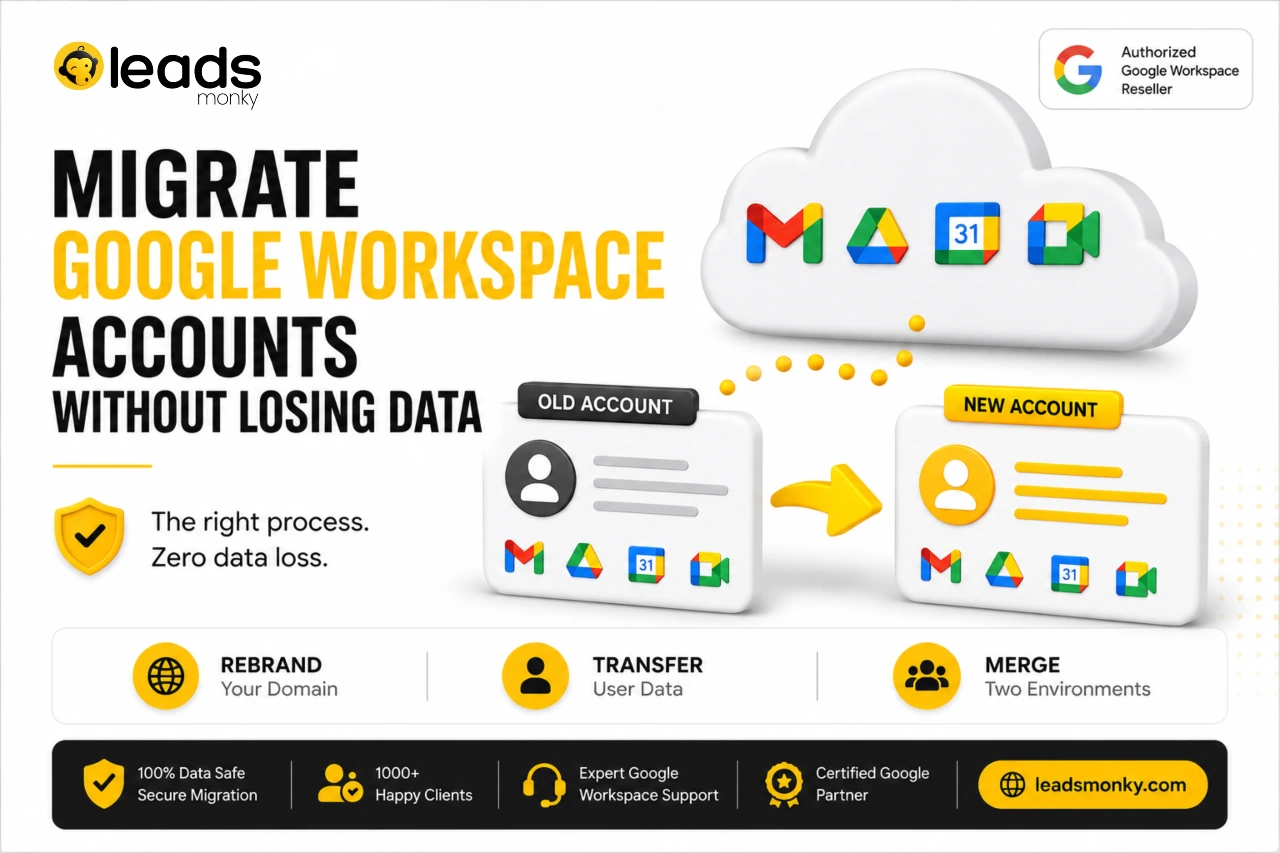
You’re consolidating multiple Google Workspace accounts. This typically comes up after a merger, acquisition, or when separate business units signed up independently. Consolidating without a clear plan risks data loss and duplicate licensing costs.
You need industry specific compliance work. Healthcare organizations navigating HIPAA, financial firms with regulatory requirements, or any business with a formal compliance audit ahead typically needs a consultant who can document controls and configurations against a specific standard, not just general good practices.
You’re integrating Workspace with custom internal systems. Connecting Google Workspace to a CRM, ERP, or a proprietary internal tool through custom development work is a project scope, not a standard setup task.
You’re managing a large, multi phase change management rollout. A 500 person organization migrating from Microsoft 365 with training programs, phased rollouts, and adoption tracking across departments is a different scale of work than a small team’s initial signup.
Signs a Reseller Covers What You Actually Need
For a large share of the businesses searching for a “Google Workspace consultant,” the actual need is simpler than full consulting engagement.
You’re setting up Workspace for the first time on a new or existing domain. Domain verification, MX record setup, and mailbox creation are standard reseller tasks, not a consulting project.
You’re moving from a free Gmail account or a small existing provider. Migrating a handful of mailboxes is typically included in reseller onboarding rather than billed as a separate project.
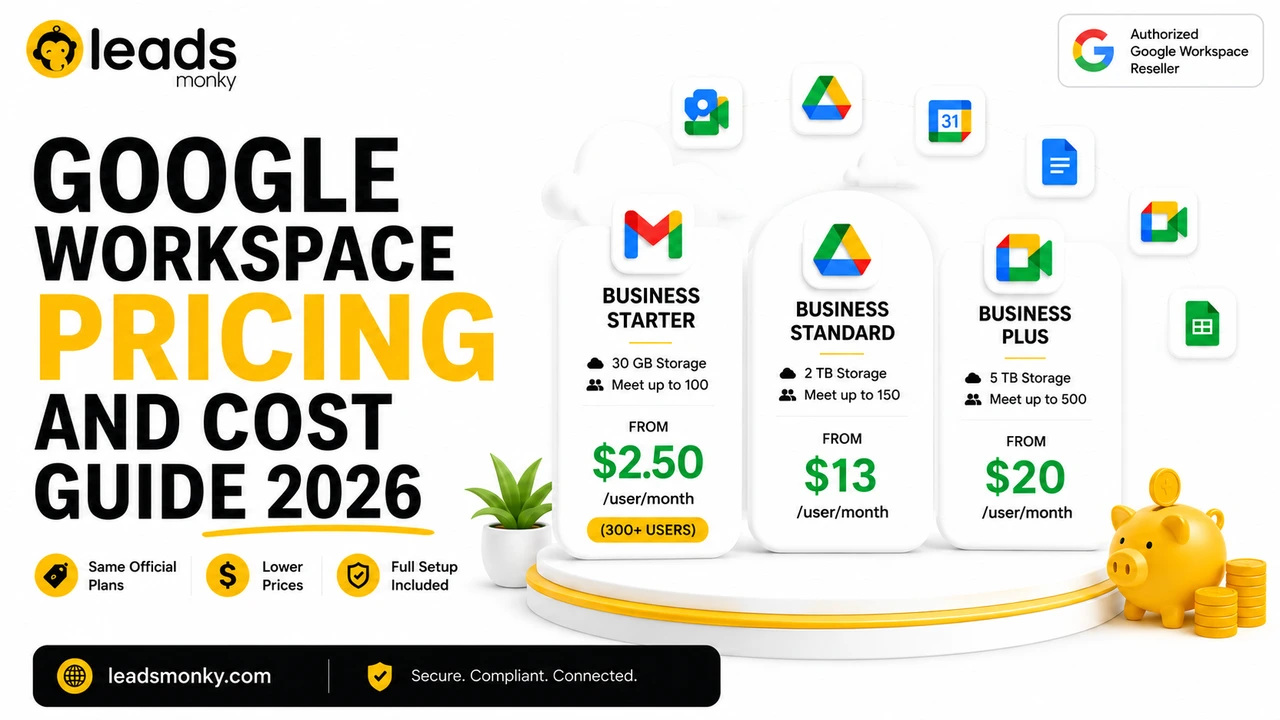
Your main concern is price. If lowering the per user cost compared to Google’s direct rate is the priority, that is a reseller’s core function. Google’s official pricing runs $8 per user per month for Business Starter, $18 for Standard, and $28 for Plus, and Leads Monky, as an authorized Google Workspace reseller, publishes pricing below those figures, starting at $2.50 per user per month at 300 or more users, with setup and support included rather than billed as separate consulting hours.
You want ongoing support without a retainer. If you want somewhere to direct questions as they come up without committing to a consulting contract, reseller support typically covers this at no extra charge beyond the subscription.
What Google Workspace Consulting Typically Costs
Consulting pricing is not standardized the way Workspace subscription pricing is, since it depends on project scope, and firms in this space generally do not publish flat rates publicly. Based on how these engagements are commonly structured, expect one of a few models: hourly consulting rates for smaller, defined tasks, tiered monthly support plans for ongoing managed administration, or fixed project pricing for larger scopes like a full migration or security audit.
This is different from reseller pricing, which is typically a flat, published per user monthly rate with setup included. If a provider’s website does not list a price and instead asks you to book a call or request a quote, that is a strong signal you’re looking at a consulting engagement rather than a standard reseller subscription. Neither model is inherently better, but knowing which one you’re evaluating helps you compare offers accurately instead of comparing a flat subscription price against an open ended consulting quote.
What a Google Cloud Partner Tier Actually Means
Several firms in the Google Workspace consulting space describe themselves with terms like “Premier Partner” or “certified partner.” These are not marketing phrases a company can apply to itself freely. Google operates a formal partner program with defined tiers based on factors like the number of customers a firm has successfully onboarded, staff certifications, and demonstrated technical expertise across specific product areas.
A Premier Partner designation sits at a higher tier than a standard reseller relationship and generally reflects a longer track record and broader service scope, often including security audits, large scale migrations, and multi product integrations across tools beyond Workspace itself. A standard authorized reseller relationship, by contrast, is focused specifically on selling and supporting Workspace licenses, without necessarily extending into the deeper consulting and integration work a Premier Partner typically offers.
Neither tier is inherently the right choice for every business. What matters is matching the tier to your actual need. A business with a straightforward setup and support need does not typically require Premier Partner level services, while a business planning a complex multi platform integration project likely does. Confirming a firm’s actual tier through Google’s own partner directory, rather than assuming based on a website badge, is a reasonable step before committing to either type of engagement, and it protects you from paying consulting rates for a partner status that isn’t formally verified.
A Practical Way to Think About Which One You Need
A simple way to sort this out is to write down the specific outcome you’re trying to reach, then check which type of provider is built around that outcome.
If your answer sounds like “I need business email set up on our domain” or “I want a lower price than what Google charges directly,” that maps closely to what a reseller is built to handle, typically without a separate consulting fee.
If your answer sounds like “we need a security posture review before an audit,” “we’re merging two companies’ Google accounts,” or “we need Workspace connected to our CRM through a custom integration,” that maps to consulting work, and it’s reasonable to expect a project based quote rather than a flat monthly price.
If you’re not sure which category your situation falls into, a short conversation with a reseller is usually a low cost way to find out. A straightforward reseller will typically tell you directly if your need is outside their scope rather than taking on a project they aren’t set up to handle well, since a poorly scoped engagement tends to create more support burden for them later, not less.
Confirm the specific problem you need solved before evaluating providers. A vague goal like “get help with Google Workspace” makes it hard to compare firms fairly. A specific goal like “migrate 200 mailboxes from Microsoft 365 with zero data loss” lets you ask each firm the same concrete questions.
Ask what happens after the project ends. Some consultants hand off a fully configured environment with documentation; others expect an ongoing retainer for continued support. Confirm which model you’re signing up for before the engagement starts.
Check the partner tier claim directly. If a firm states a specific Google Cloud partner tier, that status is publicly checkable through Google’s own partner directory rather than something to take on trust from a website badge.
Ask for a scoped, written estimate rather than an open ended hourly arrangement, particularly for defined projects like a migration or audit, so cost overruns are less likely to surprise you partway through.
Common Mistakes When Hiring a Google Workspace Consultant
Hiring a full consulting firm for basic setup. This typically means paying consulting rates for work a reseller would include in the subscription price, without any added benefit for a straightforward signup.
Not clarifying what’s included in the quoted price. Migration, training, and ongoing support are sometimes bundled and sometimes billed separately even within a single firm’s different service tiers. Get this in writing before signing.
Skipping reference checks for larger projects. For consolidation, compliance, or large scale migration work, asking for a reference from a business of similar size and complexity is a reasonable request most established consultants can accommodate.
Conclusion
Google Workspace consultants are the right fit for genuinely complex work: security audits, compliance documentation, account consolidation, and large scale change management. For most small and mid sized businesses whose actual need is getting set up on a verified domain with reasonable pricing and someone to ask questions to afterward, a reseller typically covers that ground without a separate consulting fee. Leads Monky is an authorized Google Workspace reseller serving 1,000+ companies across the USA, UK, UAE, Pakistan, and India, with setup, migration, and ongoing support included in its published pricing. Visit Google Workspace Official Page to see current plans.
FAQs
What is the difference between a Google Workspace consultant and a reseller?
A reseller sells Workspace licenses, usually with setup and support bundled into the price. A consultant is hired separately, often billed hourly or per project, for work like security audits, compliance, or complex migrations.
Do I need a consultant just to set up Google Workspace?
Usually not. Standard setup, domain verification, and mailbox creation are typically included with a reseller at no extra consulting fee, and consulting is generally more relevant for complex or specialized projects.
How much does a Google Workspace consultant cost?
Pricing varies by firm and project scope, since most consulting engagements are quoted individually rather than published as a flat rate. Expect hourly rates, tiered support plans, or fixed project pricing depending on the provider and the work involved.
Can a Google Workspace reseller also do consulting work?
Some can, though scope varies significantly by provider. Confirm directly whether services like security audits, compliance documentation, or custom integrations are included or would require a separate consulting arrangement.
How do I verify a consultant’s Google partner status?
Google maintains its own partner directory that lists verified partner tiers. Checking a firm’s status there is more reliable than trusting a partner badge displayed on the company’s own website alone.
Is it cheaper to use a reseller instead of a consultant?
For standard setup and ongoing support, generally yes, since reseller pricing is typically a flat published rate with service included. Consulting is priced separately and tends to cost more for complex, project based work that a reseller would not typically handle.
Ready to Fix Your Cold Email?
What you get:
- ✓ Complete infrastructure: 30 emails + 10 domains
- ✓ 10,000 personalized emails monthly
- ✓ First consultations in 5–6 weeks