
Quick Answer
Google Workspace Data Loss Prevention (DLP) lets admins create rules that automatically detect sensitive content in Gmail and Drive, then take action — block, warn, quarantine, or audit — before that content leaves the organization. DLP rules are configured in the Admin console under Security → Access and data control → DLP and classification. Every paid Workspace plan includes basic DLP for Gmail. Drive DLP and advanced content detectors require Business Plus or Enterprise.
You’ve heard about Google Workspace. Maybe your team is already using it. Or maybe you’re debating whether it’s worth switching from Microsoft 365.
Here’s the truth: most reviews give you a surface-level list and call it a day. This one doesn’t.
We dug into the real Pros and Cons of Google Workspace tested features, analyzed pricing, and compared it against competitors. We also cover something almost no other review touches: why buying through a Google Workspace reseller saves you serious money.
Let’s get into it.
What Is Google Workspace And Who’s It For?

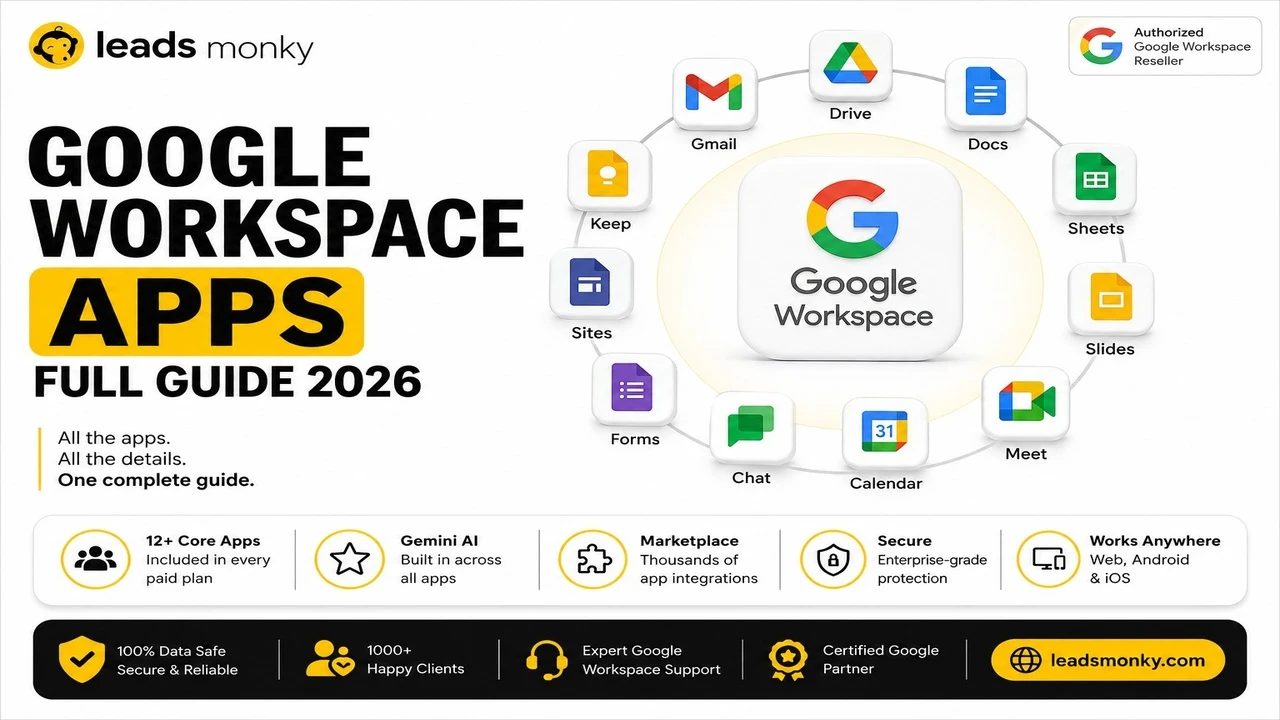
Google Workspace (formerly G Suite) is Google’s cloud-based productivity suite for businesses. You get Gmail, Google Drive, Docs, Sheets, Slides, Meet, Calendar, Chat, and more all under one subscription with your own professional domain.
Over 9 million businesses use it worldwide. That’s not a coincidence.
It’s built for teams that work in the cloud, together, in real time. If that sounds like your team you’re already halfway sold. But let’s look at the full picture first.
The Pros of Google Workspace
1. Real-Time Collaboration That Actually Works
This is where Google Workspace genuinely shines above every competitor.
Multiple people can edit the same Google Doc, Google Sheet, or Google Slide simultaneously. You see each other’s cursors, changes appear instantly, and there’s zero version conflict. No emailing files back and forth. No “who has the latest copy?”
Microsoft retrofitted collaboration onto a desktop-first product. Google built it from day one. That difference shows up every single workday.
2. Gemini AI Is Included Not an Expensive Add-On
Here’s something most reviews miss completely.
Google Workspace bundles its Gemini AI assistant into every plan. You get AI-powered email drafting, document summarization, spreadsheet formula generation, and Google Vids for AI video creation at no extra cost.
Microsoft charges an additional $30 per user per month for its Copilot AI on top of your Microsoft 365 subscription. For a 20-person team, that’s $600/month just for AI features.
With Google Workspace, it’s already in your plan. That’s a huge win.
3. Pooled Storage Is Smarter Than Per-User Limits
Almost every competitor review just lists storage numbers. None of them explain why Google’s model is better.
Google Workspace uses pooled storage. Practically speaking if 6 of your 10 team members only use 5GB each, the leftover storage is automatically available to the heavier users. Nobody runs out. No manual reallocation. No IT tickets.
Microsoft 365 gives each user a 1TB silo. You can’t share it. You can’t redistribute it. It’s rigid by design.
For growing businesses, pooled cloud storage means fewer surprise upgrade costs.
4. Works on Every Device Mac, PC, Linux, Chromebook
Your team probably doesn’t all use the same machines. That’s fine with Google Workspace.
It runs identically on every operating system through any browser. No software to install. No compatibility issues. No “it works differently on my Mac” problems.
Microsoft 365 can’t install Publisher or Access on Mac. Its desktop apps don’t run on Linux at all. If your team uses mixed devices, Google Workspace for business removes that headache entirely.
5. Google-Powered Search Across All Your Files
You’re using a product from the company that built the world’s best search engine. That means something.
Google Drive supports natural language queries you can literally type “budget spreadsheet from last March” and find it instantly. It reads text inside scanned PDFs using OCR, offers voice search on mobile, and auto-suggests files before you finish typing.
Finding files in SharePoint or OneDrive? That’s a completely different and much more painful experience.
6. Zero-Install Deployment A Hidden Cost Saver
There’s no software to push, no patches to manage, no version inconsistencies across machines.
Everything runs in the browser. For businesses without a dedicated IT team (which is most small businesses), this alone saves hundreds of hours per year in setup and maintenance.
It’s a benefit most Google Workspace reviews don’t put a number on. But if IT support costs $75–$150/hour, even a few saved hours per month adds up fast.
7. Microsoft File Compatibility One-Way and Underrated
Google Workspace opens, edits, and exports Microsoft Word, Excel, and PowerPoint files. You can receive a .docx from a client and edit it directly in Google Docs without installing Word.
The reverse is not true. Microsoft 365 cannot natively work with Google’s formats.
For businesses that constantly receive files from Microsoft-using clients or partners this interoperability is a daily convenience you’ll appreciate more than any marketing bullet point.
The Cons of Google Workspace
1. Offline Access Is a Workaround, Not a Feature
Let’s be direct. This is Google Workspace’s biggest weakness.
To use Docs, Sheets, or Slides offline, you must manually enable it through Chrome and only Chrome. Even then, you lose Gmail label creation, Calendar event responses, and spell check when you’re offline.
For other Drive files (PDFs, Word docs), you need to install Google Drive for Desktop and manually mark every file as “available offline” in advance.
Microsoft 365’s desktop apps work offline natively, out of the box. If your team frequently works in areas with poor connectivity on planes, in the field, in rural offices this limitation matters a lot.
2. Google Sheets Can’t Replace Microsoft Excel for Power Users
For everyday spreadsheet work? Sheets is excellent.
But if your finance or operations team uses complex Excel features Power Query, VBA macros, advanced pivot tables, or industry-specific templates Google Sheets will frustrate them.
Excel has 19+ chart types. Sheets has 7. Excel’s macro ecosystem is decades deep. Migrating complex legacy Excel workbooks to Sheets often breaks them entirely.
If your team lives inside Excel, this is a dealbreaker worth taking seriously.
3. Gmail’s Inbox Isn’t for Everyone
Gmail uses labels instead of traditional folders. For teams migrating from Outlook, this takes real adjustment often weeks of frustration.
Outlook also offers advanced email rules, conditional inbox formatting, and sophisticated calendar overlays that Gmail simply doesn’t match. Heavy Outlook users will feel the gap.
It’s not that Gmail is bad. It’s genuinely excellent for most people. But power Outlook users will miss features they didn’t even realize they relied on.
4. Enterprise Security and Compliance Is Paywalled
This is the con that almost every competitor review softens or skips.
Google Vault Google’s tool for data archiving, legal hold, and eDiscovery is only available on Business Plus ($22/user/month) and above. Context-aware access controls and advanced endpoint management are also locked behind higher tiers.
For businesses in legal, finance, or healthcare industries with strict compliance requirements the entry and mid-tier plans may not be enough. Microsoft 365 bakes more compliance tools into its lower tiers.
If regulatory compliance is non-negotiable for your business, factor this into your plan selection.
💡 Need help setting up Google Workspace?
We’re certified Google partners offering 64% off + free professional setup ($2,000 value). Used by 1000+ companies.
Get your quote →5. No Built-In CRM or Project Management
Google Workspace doesn’t include a CRM or a full project management tool. You’ll need to integrate third-party options like HubSpot, Asana, Trello, or Salesforce.
Each integration is an additional monthly cost. Each is another login. Each is another potential point of failure.
Microsoft 365 includes Planner for basic project management and integrates natively with Dynamics 365. Not a dealbreaker for most small teams but worth knowing before you commit.
Only Need Professional Business Email?
Businesses that do not need the complete Google Workspace suite can consider Neo Mail. It offers professional custom-domain email, a free domain with eligible plans, and an AI-powered website builder, with plans starting from $1.99 per mailbox per month.
Google Workspace Pricing in 2026 What You Actually Pay
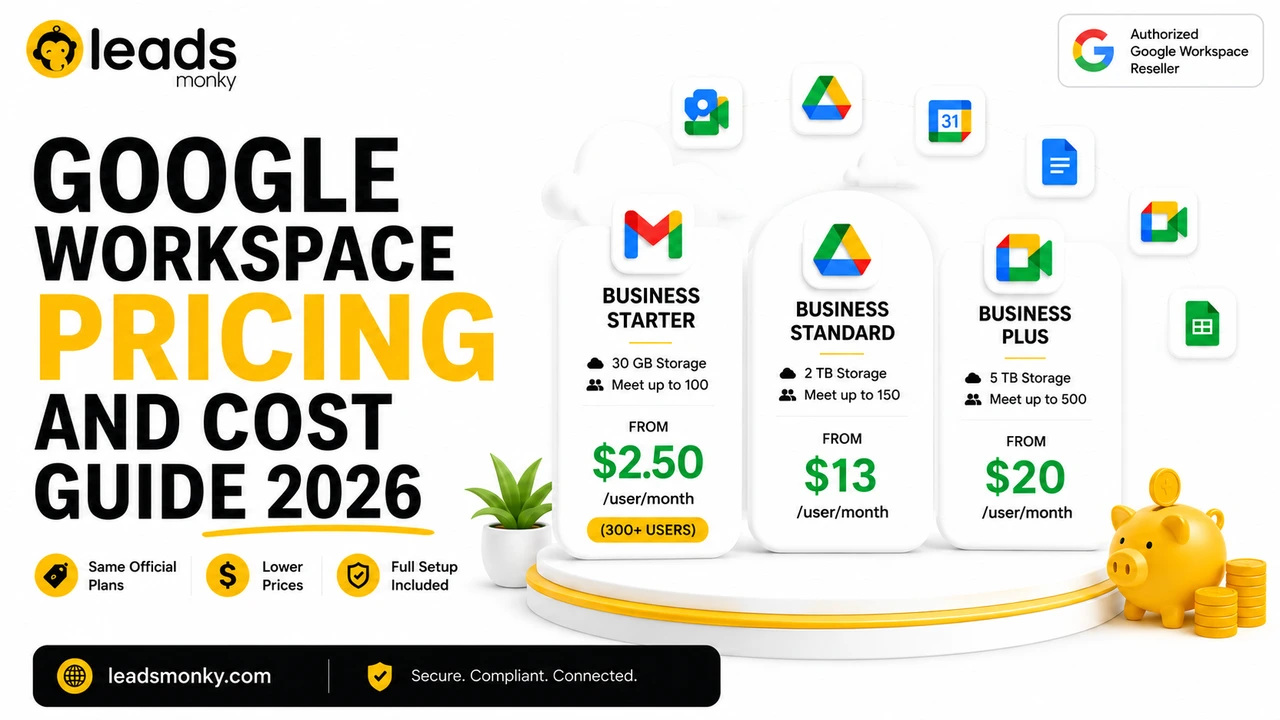
| Plan | Price/User/Month | Storage | Best For |
| Business Starter | $7 | 30GB pooled | Small teams, cold email |
| Business Standard | $14 | 2TB pooled | Growing teams (10–100) |
| Business Plus | $22 | 5TB pooled | Security & compliance |
| Enterprise | Custom | Unlimited | 300+ user organizations |
Note: Full Gemini AI access across all apps requires Business Standard or higher. The Starter plan limits Gemini to Gmail only.
Why Buy Through a Google Workspace Reseller Not Directly From Google?
Here’s something most buyers never consider and it costs them money every month.
When you buy Google Workspace directly from Google, you pay full retail price, you configure everything yourself, and you handle your own DNS, SPF, DKIM, and DMARC records. For most businesses, that means hiring someone or spending hours figuring it out.
A certified Google Workspace reseller changes the equation entirely. You get the same product same reliability, same Google infrastructure but with expert setup, better pricing, and ongoing support baked in.
Leads Monky is one of the best examples of this model done right. As a certified Google Workspace reseller and authorized partner, they offer Business Starter plans from just $2.50/mailbox/month that’s 50–60% less than Google’s direct retail pricing, with zero setup fees.
Here’s what makes Leads Monky different from just buying cheap licenses:
- ✅ Complete cold email infrastructure setup DKIM, DMARC, SPF, and spam protection configured from day one
- ✅ USA-based IPs only critical for cold email deliverability
- ✅ Email warmup guidance they help you build sender reputation safely from the start
- ✅ Full admin access you own your accounts, 100%
- ✅ 24/7 expert support not a chatbot, real people who understand email infrastructure
- ✅ Integration with tools like Smartlead, Instantly, Mailshake, and Lemlist
They’ve configured Google Workspace for 151+ companies globally from SaaS startups and digital agencies to cold email outreach teams and e-commerce brands.
If you’re a business that relies on professional email, cold outreach, or high-volume sending buying through Leads Monky means you’re not just getting a license. You’re getting a fully configured, deliverability-optimized email infrastructure from day one.
That’s a completely different value proposition than clicking “Buy” on Google’s website.
Google Workspace vs Microsoft 365 The 30-Second Verdict
Choose Google Workspace if you’re a remote-first team, value real-time collaboration, want AI tools included without extra cost, or need cross-device compatibility without IT overhead.
Choose Microsoft 365 if your team depends on advanced Excel, needs robust offline access, operates in a heavily regulated industry, or runs deep Microsoft-stack workflows.
Both are excellent. The right one depends entirely on how your team actually works not which brand has better marketing.
Final Verdict: Is Google Workspace Worth It in 2026?
Yes for the right business, absolutely.
Google Workspace delivers best-in-class collaboration, bundled AI that saves you $30/user/month compared to Microsoft, smarter pooled storage, and a zero-install setup that remote teams love.
Its weaknesses offline limitations, Excel’s depth, Gmail’s learning curve for Outlook users are real. But for most small to mid-sized businesses, these are manageable trade-offs.
And if you want to maximize value, don’t buy directly from Google. Work with a certified Google Workspace reseller like Leads Monky get the same product at up to 60% less, with expert configuration and ongoing support included.
That’s not just a smarter purchase. It’s a smarter setup for everything that comes after.
FAQs
Q: What is the disadvantage of Google Workspace?
Limited offline access, weaker Excel-level spreadsheet features, and enterprise security tools locked behind expensive plans.
Q: What is the Google 20% rule?
Google’s famous internal policy where employees spend 20% of their work time on personal passion projects it’s what gave birth to Gmail and Google Maps.
Q: Is Google Workspace a good idea?
Yes for most small to mid-sized businesses that prioritize collaboration, remote work, and cloud-first workflows, it’s an excellent investment.
Q: Is Google Workspace cheaper than Microsoft 365?
It depends on the plan, but Google Workspace becomes significantly cheaper when you factor in that Gemini AI is included Microsoft charges an extra $30/user/month for Copilot AI.
Q: Is there a better alternative to Google Workspace?
Microsoft 365 is the closest rival, but no alternative matches Google Workspace’s real-time collaboration, AI value, and cross-device compatibility at the same price point.
Q: Why use Google Workspace instead of Gmail?
Google Workspace gives you a professional custom domain email (you@yourcompany.com), admin controls, team management, and business-grade security that free Gmail simply doesn’t offer.
Q: What do you dislike about Google Workspace?
The offline experience feels like a workaround, Gmail’s label system frustrates Outlook users, and Google Sheets still can’t match Excel for advanced data work.
Q: Why are people leaving Google Docs?
Some power users switch back to Microsoft Word for advanced formatting, macros, and offline reliability but for most teams, Google Docs remains the better collaboration tool.
Q: What are the risks of Google Workspace?
Data privacy concerns, vendor lock-in, limited offline functionality, and compliance gaps on lower-tier plans are the four most legitimate risks to consider.
Q: How do I avoid paying for Google Workspace?
Buy through a certified reseller like Leads Monky you get the same Google product at up to 60% off retail price, starting at just $2.50/mailbox/month.
Ready to Fix Your Cold Email?
What you get:
- ✓ Complete infrastructure: 30 emails + 10 domains
- ✓ 10,000 personalized emails monthly
- ✓ First consultations in 5–6 weeks